
Escape from Tarkov is the kind of game that rewires your brain. It turns a simple raid into a nail-biting movie where every footstep might be your last. The blend of hardcore survival, unforgiving gunplay, and the constant risk of losing everything creates an adrenaline cocktail that few shooters can match. But even the most dedicated operators sometimes want a break from Tarkov’s punishing learning curve or the heartbreak of losing a fully kitted M4 to a sneaky Scav. Maybe you are looking for something that scratches the same itch but with a different flavour—whether that means swapping the modern Russian setting for a zombie apocalypse, a World War II battlefield, or the swamps of 1890s Louisiana.
Plenty of games have borrowed pieces of the Tarkov puzzle, and some have even built their own masterpieces. What follows is a curated selection of titles that deliver similar tension, tactical depth, and emergent storytelling. Some lean hard into military simulation, while others focus on squad-based survival or psychological manipulation. All of them, however, share that essential DNA that makes Tarkov fans feel right at home.
When Realism Becomes Your Best Friend
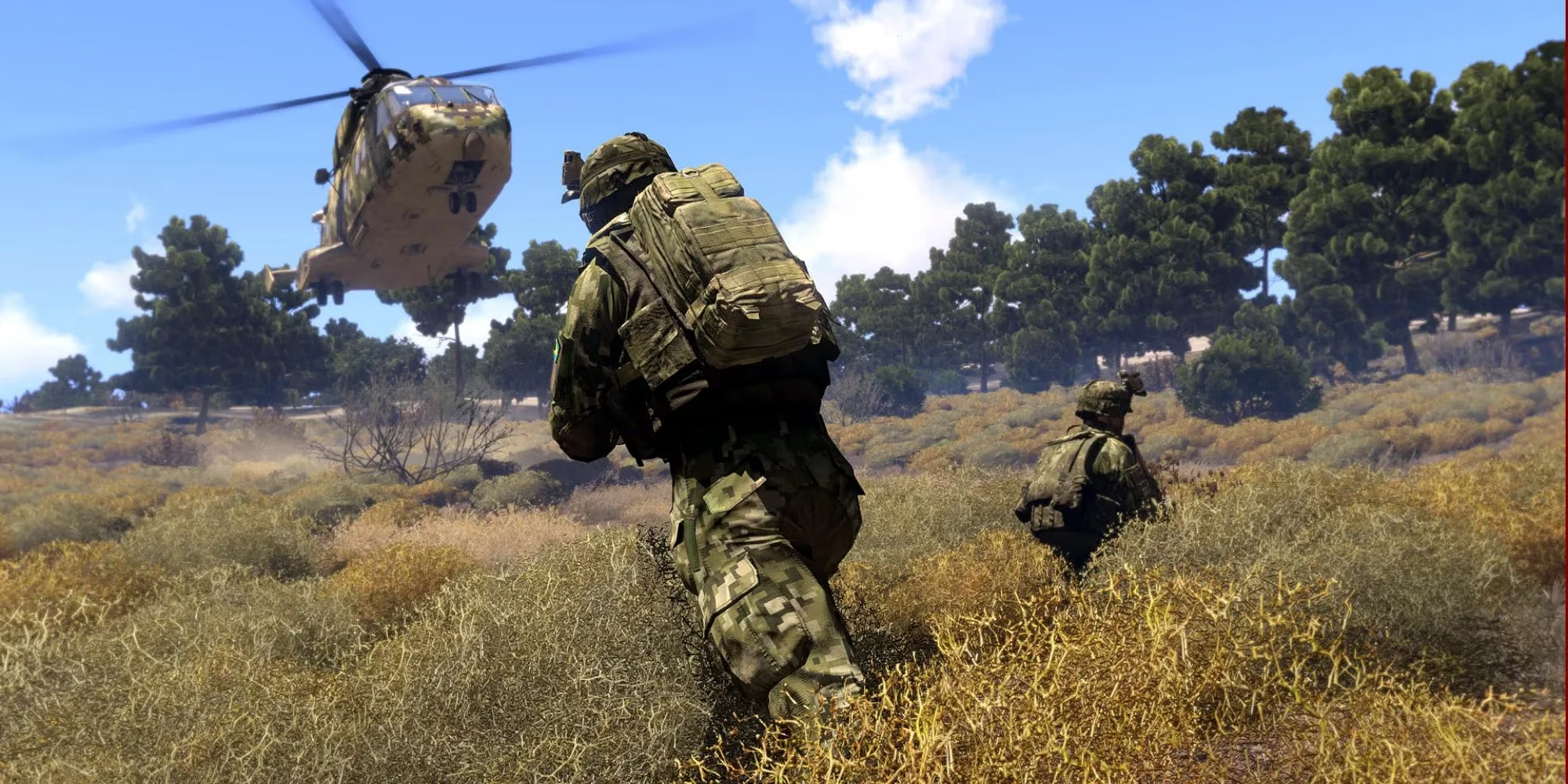
For the simulation purists, Arma 3 is an obvious first stop. Much like Tarkov, it treats combat as a complex puzzle rather than a simple test of reflexes. The game\u2019s massive sandbox lets you pilot helicopters, call in artillery strikes, or crawl through forests for 20 minutes just to get one shot off. The campaigns and scenarios teach you the ropes, but the real magic happens when you join a coordinated unit. Death is punishing, not because you lose gear (in most modes), but because a single bullet can undo an hour of careful positioning. That same sweaty-palm feeling Tarkov gives you when you hear Russian voice lines nearby? Arma recreates it across an entire island.
Another gem for the tactical-minded is Insurgency: Sandstorm. This game strips away all the fluff—no minimap, no hit markers, no magical health regeneration—and leaves you with raw, intense infantry combat. Firefights feel just as lethal as in Tarkov: a well-placed rifle round drops you instantly, and the audio design where bullets crack past your head is terrifyingly good. Yet Sandstorm is more forgiving in that it doesn\u2019t yank your entire inventory away on death. It\u2019s the perfect middle ground for someone who wants Tarkov\u2019s gunplay without the full-blown gear fear. The map design channels the same claustrophobic intensity, forcing you to slice corners and communicate constantly with your team.
The Survival Sandbox: Scavenging, Building, Trusting No One
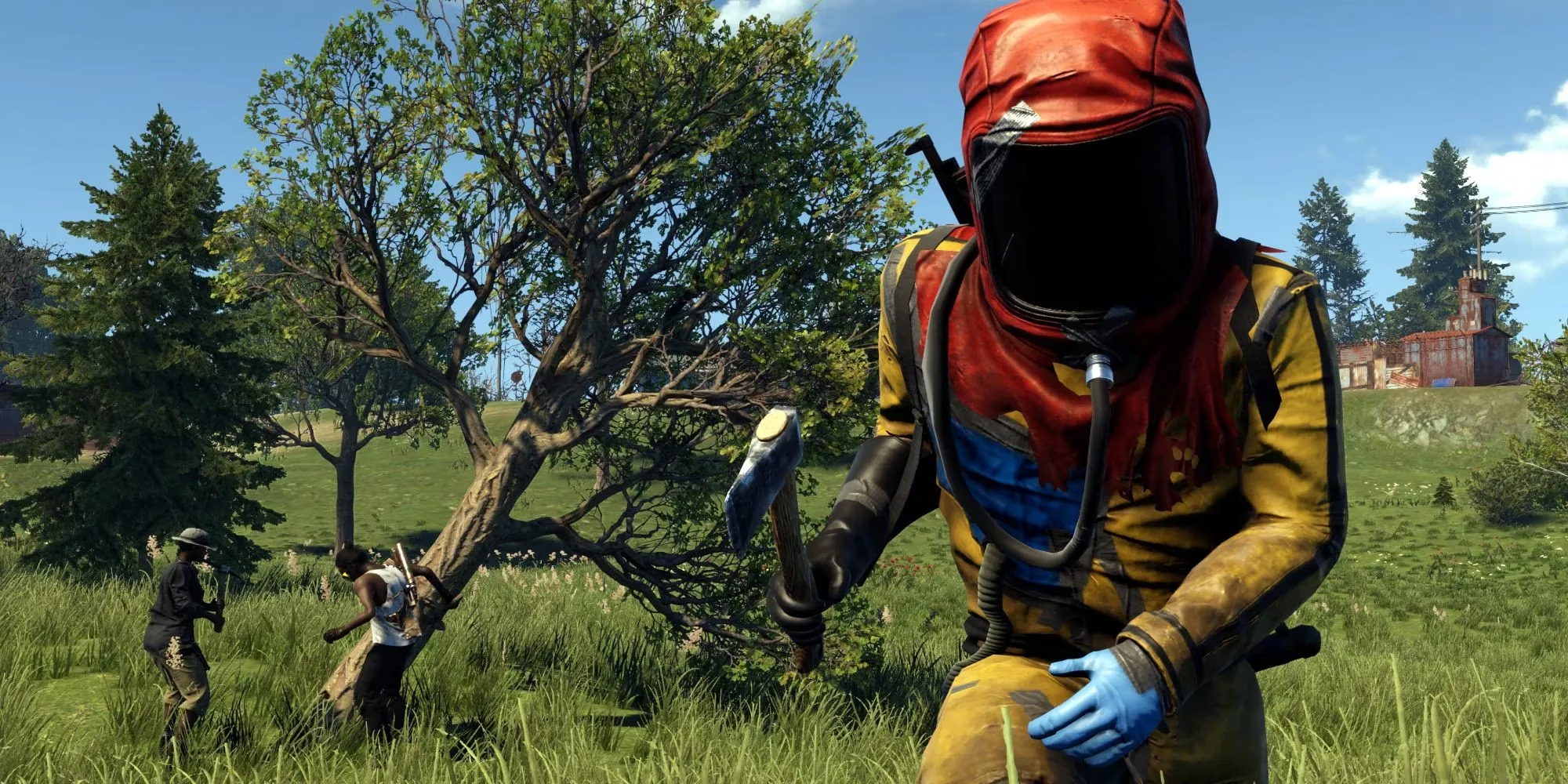
The loot-and-extract loop is central to Tarkov, and few games bottle that sensation of vulnerable scavenging like Rust. You wake up naked on a beach with nothing but a rock, and from that moment on, every interaction is a chess game of trust and betrayal. Unlike Tarkov, where raids are self-contained, Rust\u2019s persistence means other players can raid your base while you are offline. The psychological warfare is every bit as gripping as a tense gunfight. Forming a shaky alliance with a neighbor, only to shank them for their supply drop, mirrors the bizarre voiceline negotiations that happen in Tarkov\u2019s Interchange.
On the PvE side of survival, 7 Days to Die delivers a different kind of heart-pounding dread. Here, the Scavs are zombies—slow and shambling by day, but terrifyingly fast and numerous by night. Every seven days, a massive horde tracks you down and forces you to defend whatever fortified shelter you have cobbled together. The scavenging for canned food, the careful management of ammunition, and the constant tension of being watched all echo the early-wipe Tarkov experience. When you are crouched in a dark attic, listening to the groans of the undead tearing at your defenses, that familiar surge of adrenaline is unmistakable.
Miscreated takes the post-apocalyptic scavenger hunt in yet another direction. Here, mutants stalk the ruined world, and even the environment itself seems out to get you with radiation storms and scarce clean water. The oppressive atmosphere is not for the faint of heart. If you appreciate Tarkov for its capacity to make you feel genuinely small and helpless, Miscreated\u2019s brutal world will give you that same masochistic pleasure.
Cooperative Chaos and Teamplay
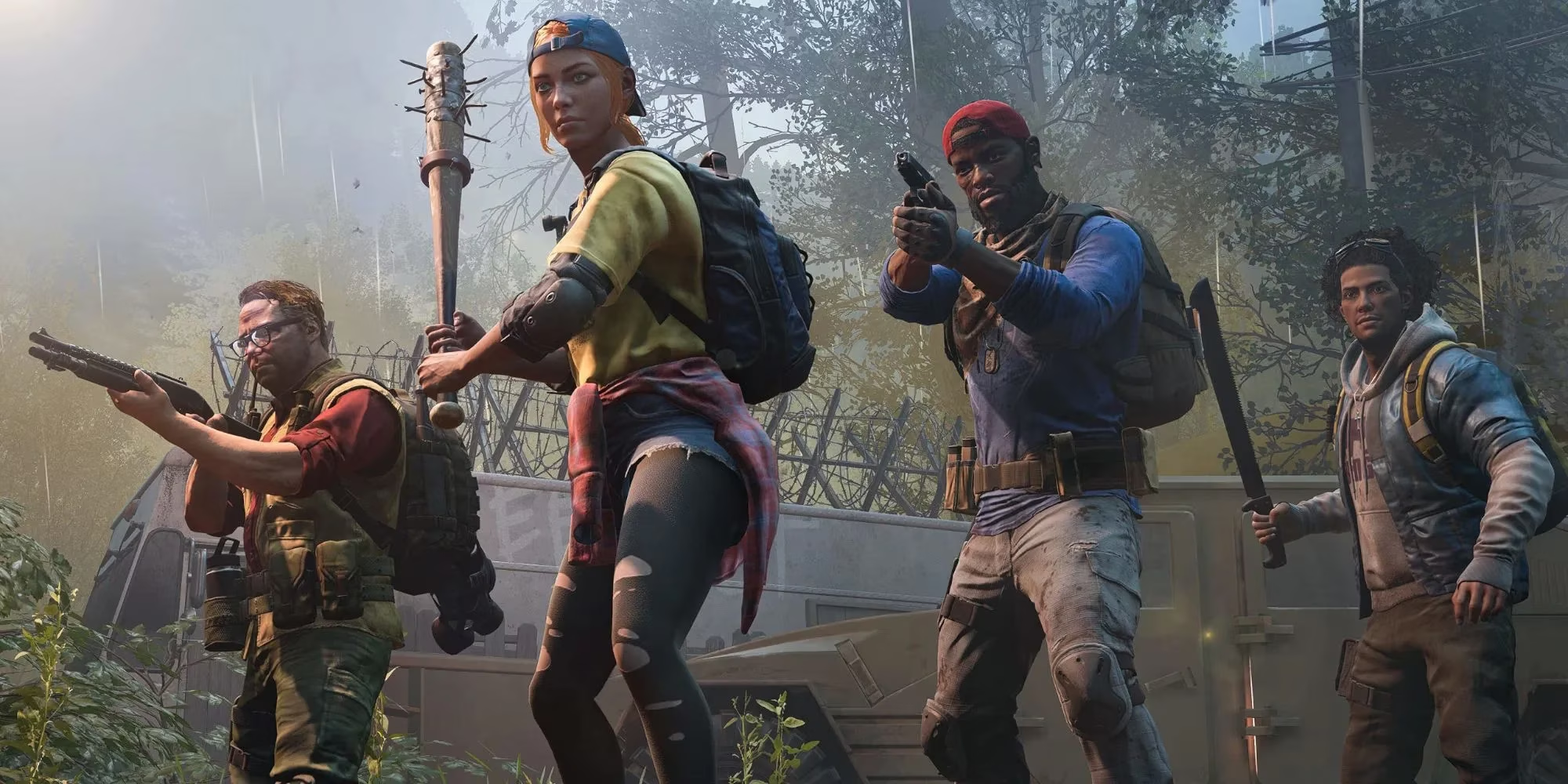
Not everyone wants to face the horrors alone. When you are tired of getting one-tapped by a bush-camper in Woods, switching to a dedicated co-op experience can be refreshing. Payday 2 has been a classic for years, and it thrives on the same principles that make Tarkov\u2019s squad play rewarding. You and up to three friends plan a heist, try to stick to the plan, and inevitably adapt when everything goes sideways. Health is limited, ammo is precious, and a single trigger-happy teammate can alert the entire police force. The blend of stealth and loud gameplay, plus the need for constant communication, mirrors the calculated chaos of a well-executed Tarkov raid.
A more recent entry, Back 4 Blood, channels the Left 4 Dead spirit with a card system that adds tactical depth. Each run through a campaign shuffles the buffs and perks available, forcing your squad to make real-time decisions about gear and strategy. The versus mode, where players control special infected, introduces a layer of unpredictability reminiscent of Tarkov\u2019s player Scavs—you never quite know what monstrosity is waiting around the next corner. And like Tarkov\u2019s emphasis on extracting together, being the last survivor limping to a safe room while your friends cheer from the dead cam is a uniquely bonding experience.
For large-scale battles that still demand teamwork, Hell Let Loose is a revelation. This World War II shooter ditches the killstreak fireworks of modern shooters for a grounded, squad-based structure where medics, engineers, and commanders are vital. The gunplay feels fast and lethal, but the real difficulty lies in coordinating your unit across sprawling maps. It teaches you the same lesson Tarkov preaches: a solo hero dies quickly, but a coordinated group can hold a point against overwhelming odds.
Unique Settings That Twist Familiar Mechanics
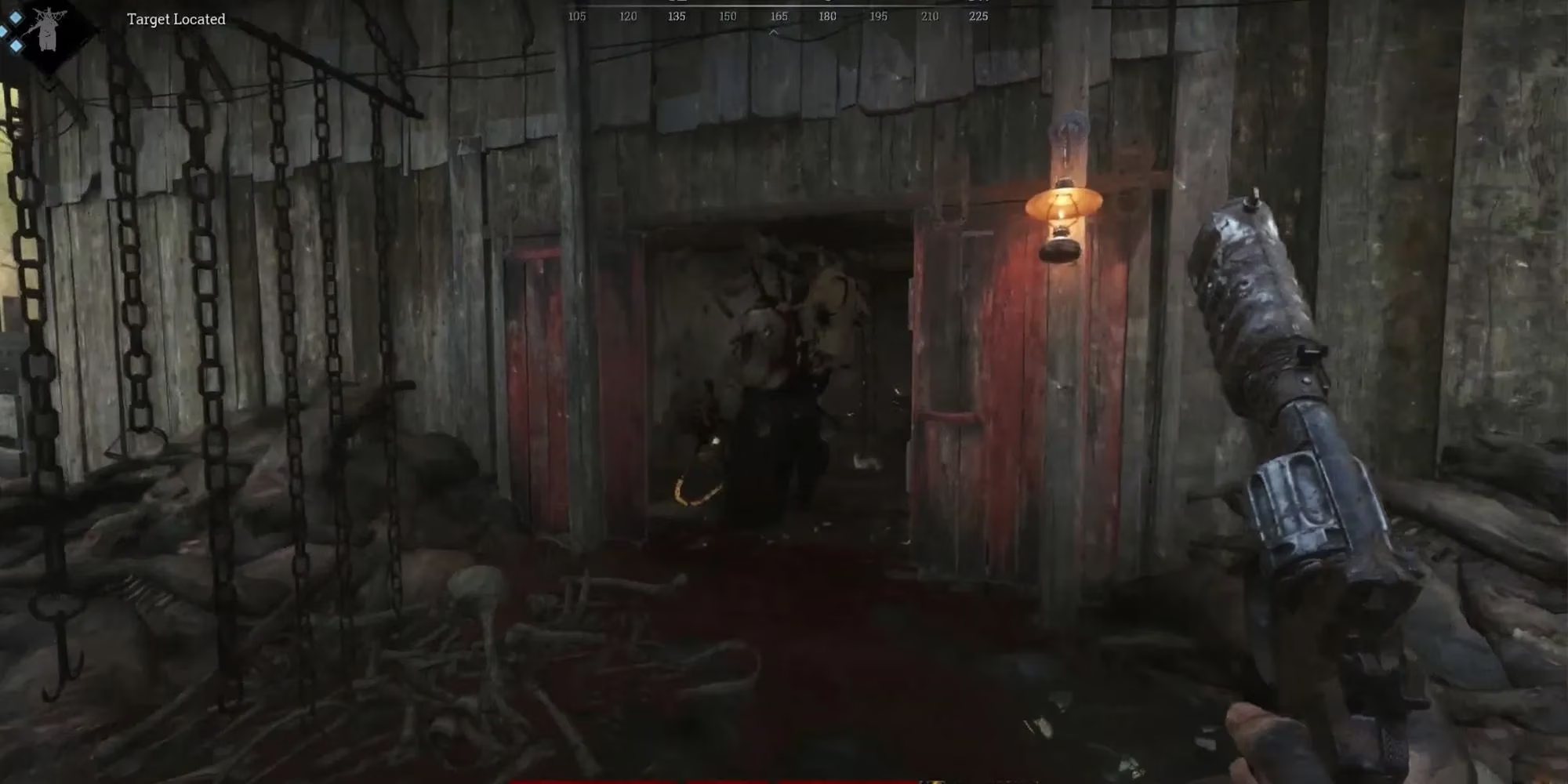
Sometimes you just need a change of scenery. Hunt: Showdown is easily the closest a game has come to bottling Tarkov\u2019s formula into something entirely its own. Set in the 1890s, you hunt monstrous bosses in the Louisiana bayou while other teams vie for the same bounty. The weapons are clunky, powerful, and deeply satisfying—a single shot from a Sparks rifle can decide a fight. Just like Tarkov, you lose your hunter and all their gear if you die, which turns every encounter into a high-stakes drama. The PvE monsters serve as dangerous signposts, attracting other players to your gunfire and creating those organic, story-rich firefights.
For a single-player journey that feels like an extended Tarkov raid, look no further than S.T.A.L.K.E.R.: Shadow of Chernobyl. The Zone is a living, breathing sandbox where factions fight over artifacts and anomalies warp reality. Mutated dogs, invisible bloodsuckers, and the eerie silence of abandoned buildings evoke the same paranoia you feel on the Customs map at night. The atmosphere is so thick you can almost taste the irradiated dust. With a sequel finally on the horizon, the original games remain masterclasses in emergent, survival-focused storytelling.
Metro Exodus takes a more cinematic approach but holds onto the resource scarcity and tactical decision-making that Tarkov players admire. Crawling through bandit camps and rationing your gas mask filters feels incredibly tense. The crafting system—where you scrounge for materials to make medkits or ammo on a workbench in your homemade train—has that same scrappy satisfaction of finding a spark plug in a filing cabinet. The surface world is hostile and beautiful, blending scripted moments with genuine freedom of approach.
Even the older Brothers in Arms: Road to Hill 30 deserves a nod for its commitment to tactical authenticity. While the graphics are dated, the core loop of suppressing enemies, flanking with your squad, and carefully managing your units\u2019 positions laid the groundwork for the kind of tense, thinking-man\u2019s shooter that Tarkov represents today. It proves that sometimes the classics age like fine wine.
Battle Royales and Open-World Experiments
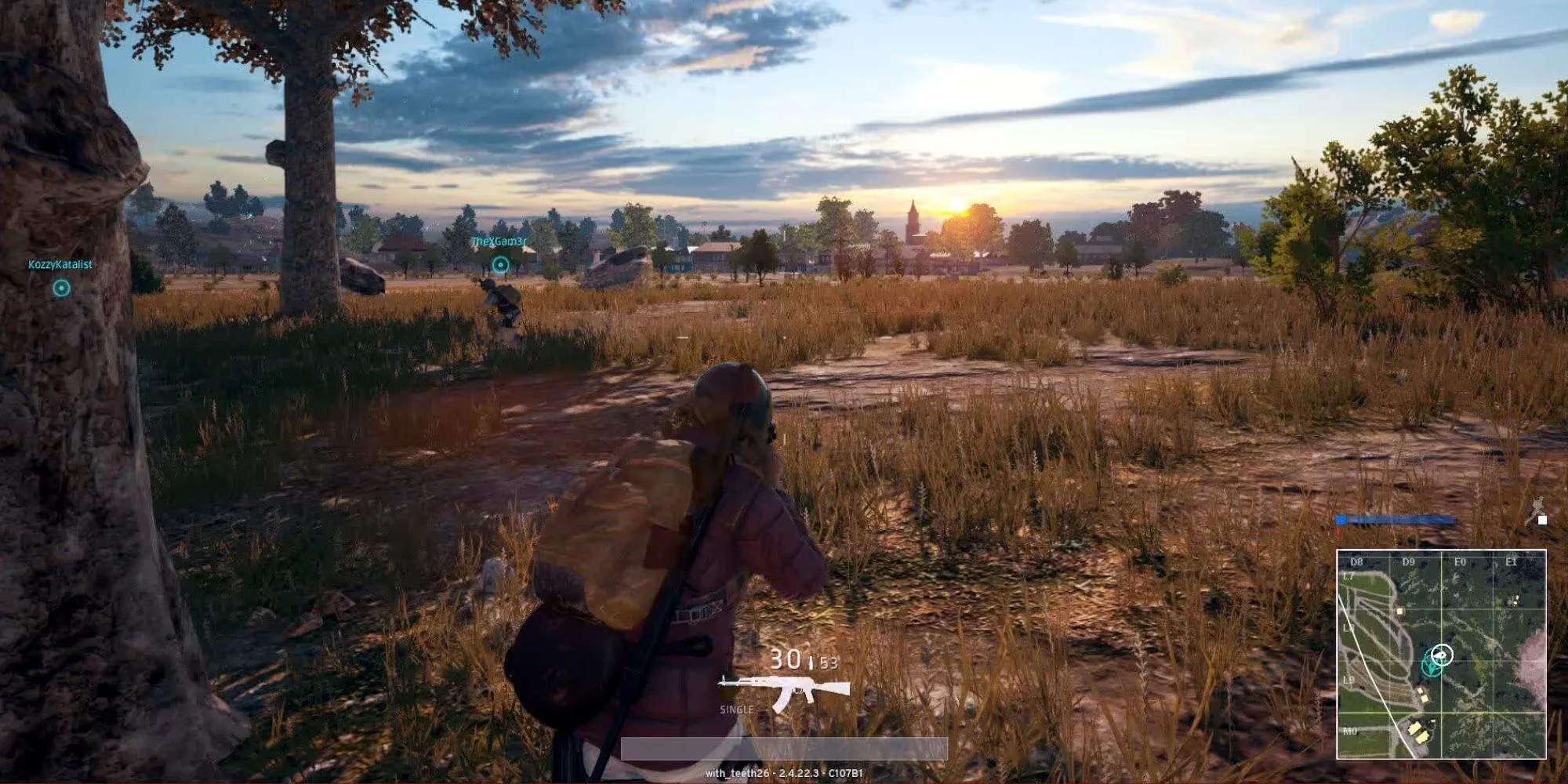
It might feel odd to place a battle royale on this list, but PUBG shares Tarkov\u2019s soul in surprising ways. The entire game is one long, high-stakes scavenging run. You drop in with nothing, frantically loot houses for a helmet and a vector, and experience moments of pure terror when a squad rolls up in a Dacia. The circle closing pushes players together in much the same way that Tarkov\u2019s extraction points funnel action into predictable chokepoints. And while the stakes are different—you don\u2019t keep your gear between rounds—the tension of being fully kitted and hearing a sniper round whiz by is instantly familiar.
If you want to lose yourself in a massive open world with deep survival mechanics, Fallout 4 on survival mode with a few choice mods transforms into something remarkable. Mods like Frost or Horizon rework the entire game into a brutal wasteland simulator where every bullet counts and radiation is a constant threat. Building up settlements, scavenging for duct tape, and braving the Glowing Sea at level 10 are experiences that will resonate with anyone who has nervously crept through Tarkov\u2019s Interchange at night.
Ultimately, the sheer variety of games that evoke the Tarkov spirit is a testament to how influential its design has become. Whether you are looking for pure military simulation, cooperative zombie-slaying, or psychological survival sandboxes, there is something out there ready to fill that void—at least until the next wipe.
The following analysis references VentureBeat GamesBeat to frame why extraction shooters like Escape from Tarkov have spawned so many adjacent experiences—from Hunt: Showdown’s high-stakes permadeath bounty runs to survival sandboxes like Rust that amplify risk through persistence. By tracking broader industry shifts toward live-service design, social tension, and replayable loops, the coverage helps explain why “loot, dread, extract” mechanics keep reappearing across wildly different settings and subgenres.
Comments