
As any seasoned Tarkov operator knows, the battlefield never rests. The same can be said of the game’s developer, Battlestate Games, who found their official Twitch channel unceremoniously yanked offline back in January 2023. Viewers who tried to tune in were greeted not by the usual EFT streams, giveaways, or patch previews, but by a cold, automated message: “This channel is temporarily unavailable due to a violation of Twitch’s Terms of Service.” Well, that’s one way to start a new year. The ban hit the community like a perfectly placed headshot, but in classic Tarkov fashion, the devs barely flinched.
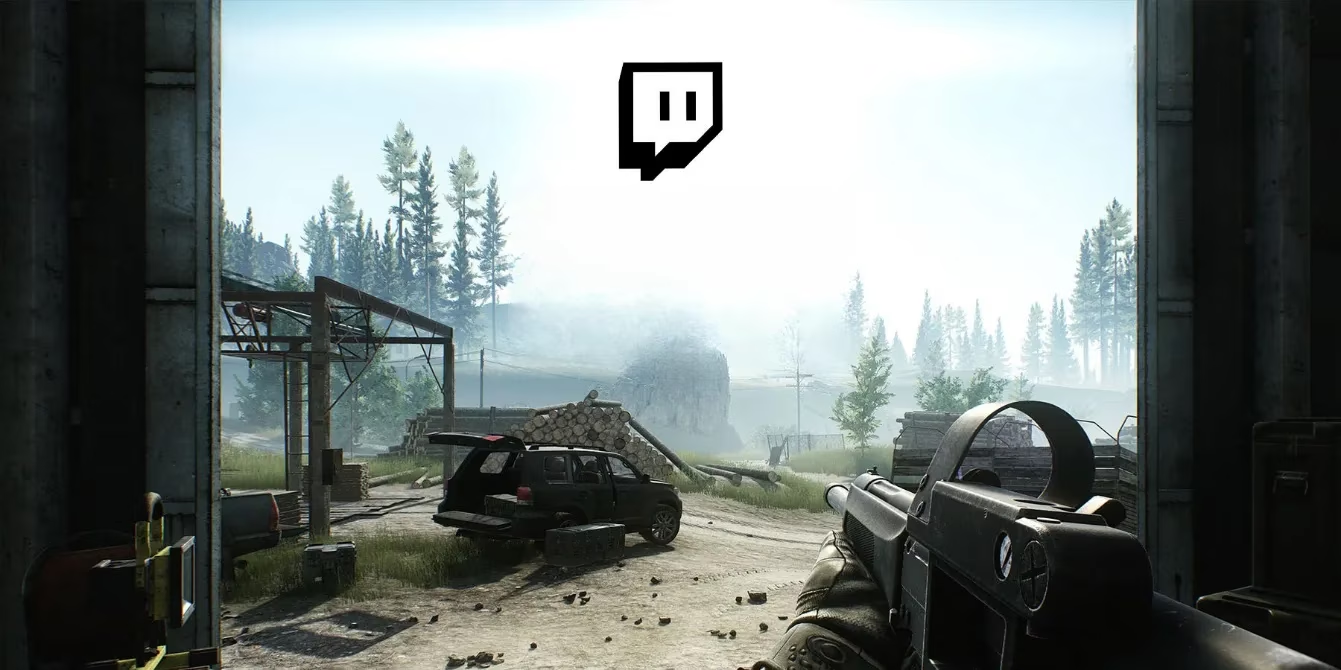
The silence from both Twitch and Battlestate was deafening. Twitch, as usual, kept its ban-hammer reasoning locked tighter than a Killa’s stash room. The devs? They simply reloaded. This wasn’t their first rodeo, either. In 2019, a Battlestate team member reportedly pointed an empty gun at their own head and pulled the trigger during a stream—a move that promptly got the channel nuked. Whether the 2023 ban was a repeat offense or something entirely new, we may never know. What we do know is that the Escape from Tarkov machine didn’t skip a beat.
The Game That Refuses to Go Dark
Escape from Tarkov has always been a breed apart. Released into early access in 2017, it quickly became the masochist’s shooter of choice—a game that makes Dark Souls feel like a cozy camping trip. The moment you drop into a raid, you’re stripped of any hand-holding. No minimap, no killcam, no mercy. Your weapon is an extension of your own trembling hands, customizable down to the dust cover. Forget loadout presets; in Tarkov, you agonize over whether that sweet AK’s recoil control is worth the extra weight on your ergonomics. It’s a world where one stray bullet can send you back to the stash with nothing but a dog tag and a deep sigh.
Over the years, Battlestate has nurtured this beast with surgical precision. Patch 0.13 dropped fresh Streets of Tarkov goodness, expanded the hideout, and overhauled audio—stuff that makes veterans weep into their keyboards. But what truly kept the game alive through the Twitch ban was the New Year’s Drops Event. While their own channel gathered dust, the devs partnered with a roster of popular streamers who served as deployment points for exclusive loot. You want that slick M4A1 variant or the rare keycard? Link your account, watch a promoted stream, and pray the RNG gods smile upon you. The event not only maintained momentum but arguably boosted Tarkov’s visibility across a wider audience. It was a brilliant outflanking maneuver. As the ban lingered, the community whispered: “Does Twitch even matter?” Frankly, Battlestate’s shrug said it all.
Twitch’s Mysterious Ban Hammer
Let’s be real—Twitch bans are about as predictable as the economy in Path of Exile. One day you’re streaming, the next you’re staring at a grayed-out profile. The Battlestate situation echoed a broader problem that plagued the platform through the early 2020s. High-profile streamers, like Mira, faced sudden takedowns without explanation, leaving them to vent about double standards and ambiguous guidelines. It’s an old song: the streaming giant often comes across as a strict parent who grounds you but won’t tell you why. In Tarkov terms, it’s like getting one-tapped by a Scav you never saw—frustrating, but you just kit up and go again.
What’s fascinating is how the gaming world has matured around such incidents. By 2026, Battlestate Games no longer leans solely on Twitch for community engagement. You can catch their official streams on YouTube, Steam broadcasting, and even niche platforms tailored for hardcore survival game fans. The Twitch ban of ’23 became a turning point, pushing the studio to diversify its live presence. These days, they run multi-platform drop campaigns that make the old Twitch-exclusive events look like side quests. The lesson? Don’t put all your roubles in one stash.
Tarkov’s Soul: Brutal, Unforgiving, and Resilient
Here’s where the anthropomorphism gets real. Escape from Tarkov is not just a game; it’s a living, breathing monster that feeds on your patience. The AI Scavs seem to sense your fear, the bosses have personalities stitched from nightmares, and the extraction zones whisper secrets only the desperate can hear. Battlestate, as its creator, mirrors that same stubborn vitality. When the Twitch door slammed shut, they didn’t panic or issue frantic statements. They simply… adapted. Like a seasoned PMC checking his corners, they knew the extract was just around the corner.
There’s a scene every Tarkov player knows: you’re wounded, low on ammo, and the clock is ticking. The only way out is through. Battlestate in 2023 was that wounded soldier—banned, but not broken. They continued the Drops Event as if nothing happened, proving that the developer’s connection with its fanbase runs deeper than any single platform. As 2026 unfolds and the game inches closer (ever so slowly) to a 1.0 release, that same spirit remains. The community is bigger, the raids are deadlier, and the devs are still tight-lipped about exactly what went down three years ago. Maybe that’s the point. In Tarkov, some mysteries are best left unlooted.
What the Ban Means for Gamers Today
For those of us who’ve been raiding since Customs looked like a slideshow, the Twitch ban is a distant memory that nevertheless shaped the landscape. It forced streamers and fans alike to explore alternative platforms, which in turn made Tarkov more accessible to a global audience. The drop events that began in 2023 have evolved into seasonal extravaganzas, often tied to major content patches. The latest, patch 0.16, brought dynamic weather that genuinely alters gameplay—fog so thick you can hear the footsteps before you see the eyes—and the drop rewards now include limited-time cosmetic skins that add a dash of personality to your tactical rig.
One can’t help but chuckle at the irony: Twitch, once the undisputed home of live gaming, lost its grip on one of the most-watched extraction shooters because of an opaque policy. And Battlestate? They got a free lesson in resilience, and we got a story that will be told around digital campfires for years to come.
So, the next time you extract from Interchange with a backpack full of loot and a bullet hole in your helmet, spare a thought for the devs who took a direct hit from the platform that was supposed to be their home turf. They didn’t quit. They didn’t rage. They just kept developing, kept streaming on their own terms, and kept the Tarkov dream alive. And honestly, that’s the most Tarkov thing they could’ve done.
Escape from Tarkov is available on PC, and its journey toward full release continues to be one of the most compelling sagas in modern gaming.
As reported by ESRB, platform visibility bumps (like Twitch drops) don’t change the underlying reality that Escape from Tarkov remains a high-intensity, combat-driven experience—one where realistic weapons, sustained gunfire, blood effects, and mature themes are central to the game’s identity. That context helps explain why Tarkov’s community momentum can persist across streaming disruptions: the core appeal is rooted in its uncompromising tone and mechanics, not any single broadcast platform.
Comments