
It is hard to believe that in 2026, with almost every major release landing on PlayStation, Xbox, and PC simultaneously, there are still a handful of legendary first-person shooters trapped in the past on aging hardware. I have spent countless hours tinkering with old rigs to access these gems, and I often find myself wondering: why do console players still have to miss out on some of the most influential titles ever made? First-person shooters used to be strictly the domain of the PC, outside of rare exceptions like Goldeneye 007 or Medal of Honor on older platforms. It was not until Halo: Combat Evolved arrived in 2001 that consoles truly felt comfortable hosting the genre. Yet despite years of ports and remasters, several absolute bangers remain elusive for controller enthusiasts.
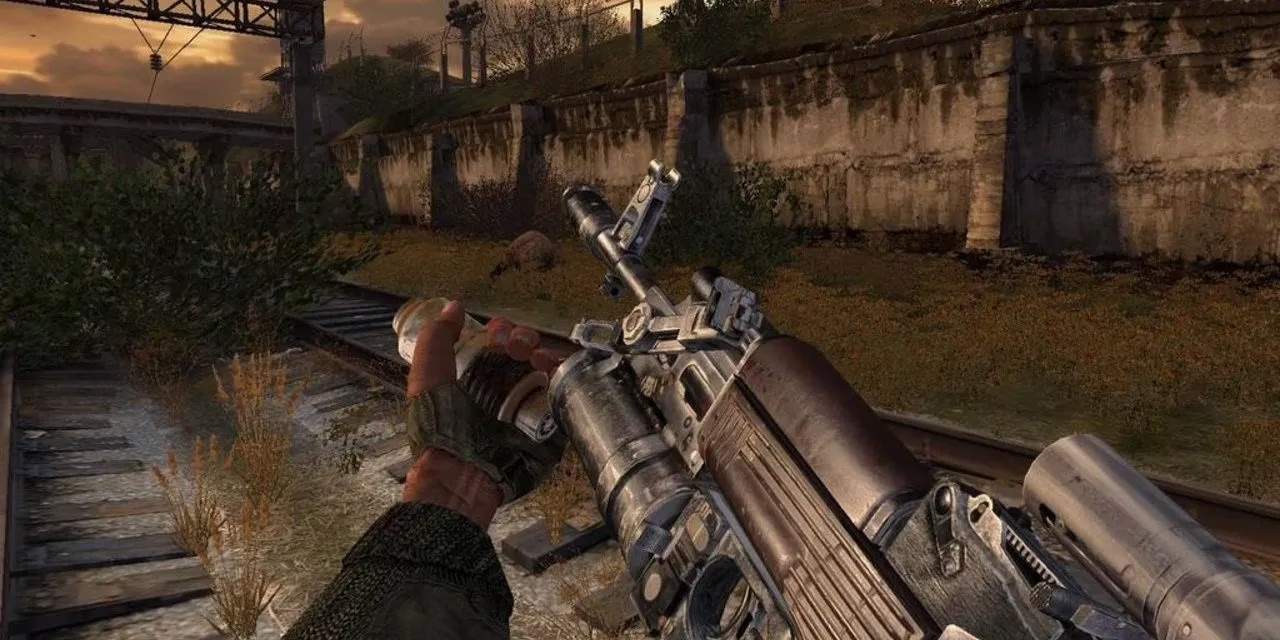
Let us start with a title that finally got the attention it deserved recently. S.T.A.L.K.E.R.: Shadow of Chernobyl remains a masterpiece of open-world survival horror. Ukrainian developer GSC Game World finally delivered the long-awaited sequel, S.T.A.L.K.E.R. 2, which launched as a Microsoft exclusive and blew away expectations. But here is the frustrating part: while new fans are diving into the Zone on modern hardware, the original atmospheric classic is still largely confined to PC. Granted, the Metro series has served as a decent substitute since many developers from GSC moved over to 4A Games, but there is no replacing the unique dread of wandering through Pripyat in the 2007 original. Would it really be so difficult to bring this experience to console now that the franchise is thriving again?
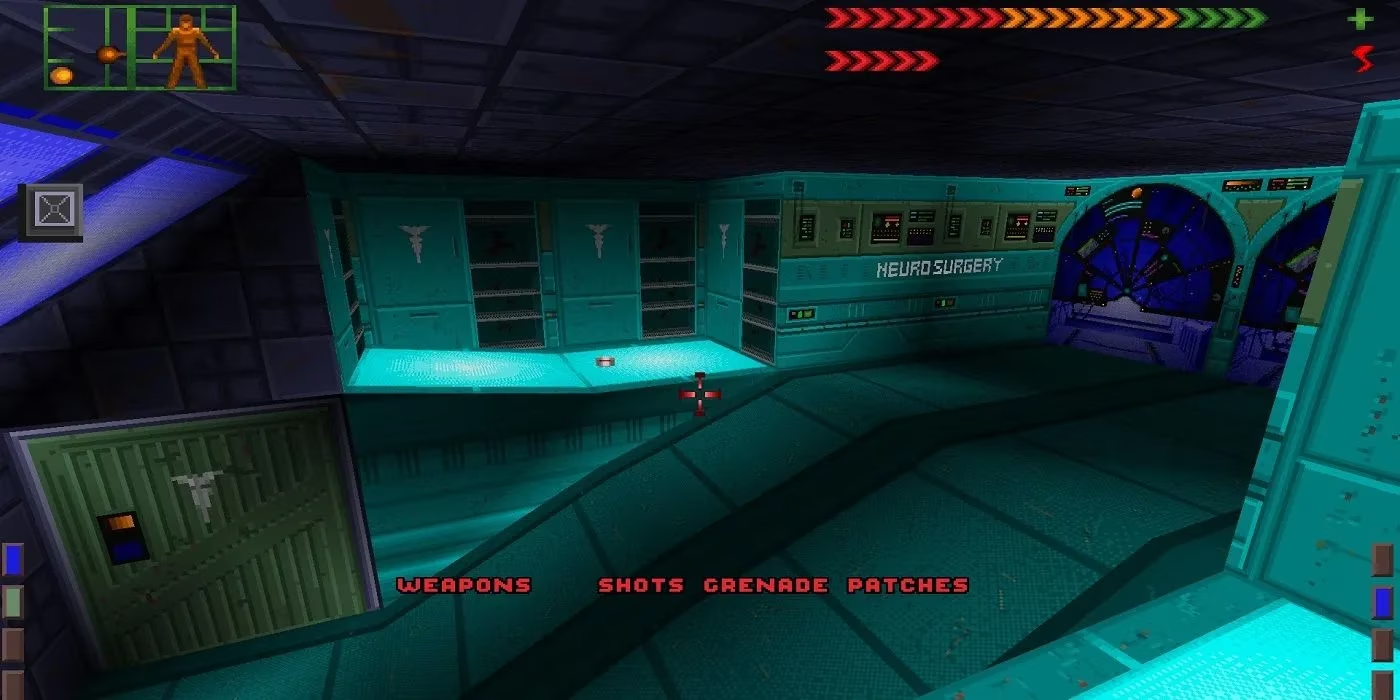
Then we have Warren Spector's masterpieces. Before Deus Ex, Spector gave us System Shock, a terrifying science fiction journey aboard a hostile space station. The 1994 control scheme is undeniably archaic, making a direct gamepad mapping feel like a nightmare. Fortunately, Nightdive Studios has been working wonders with remakes; their modern take on the title has made it significantly more accessible. But what about the immediate sequel? System Shock 2 came from Irrational Games, the studio that would later gift us BioShock and BioShock Infinite. Unlike its predecessor, System Shock 2 features mechanics much closer to modern shooters, integrating RPG elements and puzzles seamlessly. For anyone who loves the philosophy of Rapture, experiencing the Von Braun is a mandatory history lesson. While Starbreeze Studios is reportedly working on a sequel, I am still tapping my foot waiting for that console port of the original sequel.
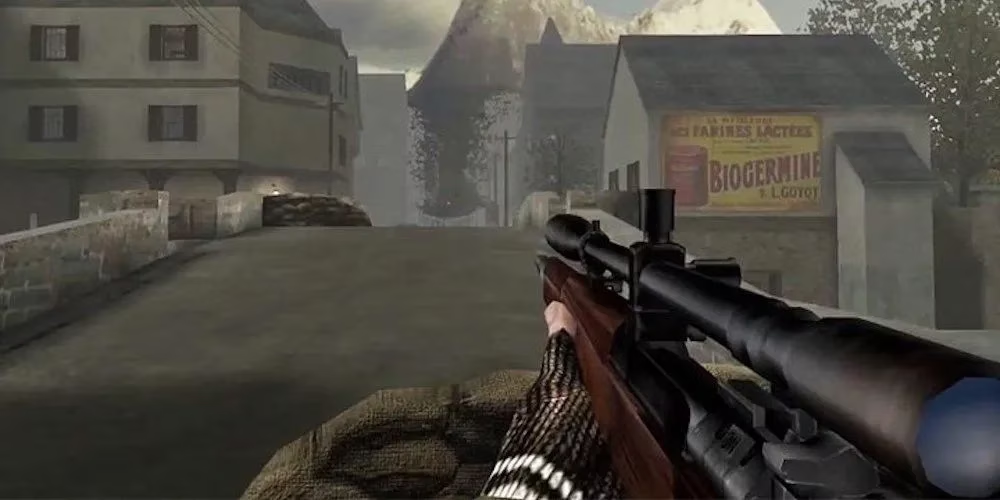
Do you remember when war shooters actually had a soul? While console owners were enjoying the fantastic Medal of Honor: Frontline, PC players were experiencing Medal of Honor: Allied Assault. Designed by Vince Zampella and Jason West—the two minds who would go on to define Call of Duty and later Titanfall—this game is where much of CoD's DNA was forged. What makes its exclusion from consoles so baffling is the multiplayer component. Frontline shipped without multiplayer, whereas Allied Assault included a full suite of competitive offerings. Storming Omaha Beach is still one of the most harrowing sequences in gaming history, and it is a shame that soundtrack of chaos is stuck on a keyboard-and-mouse setup.
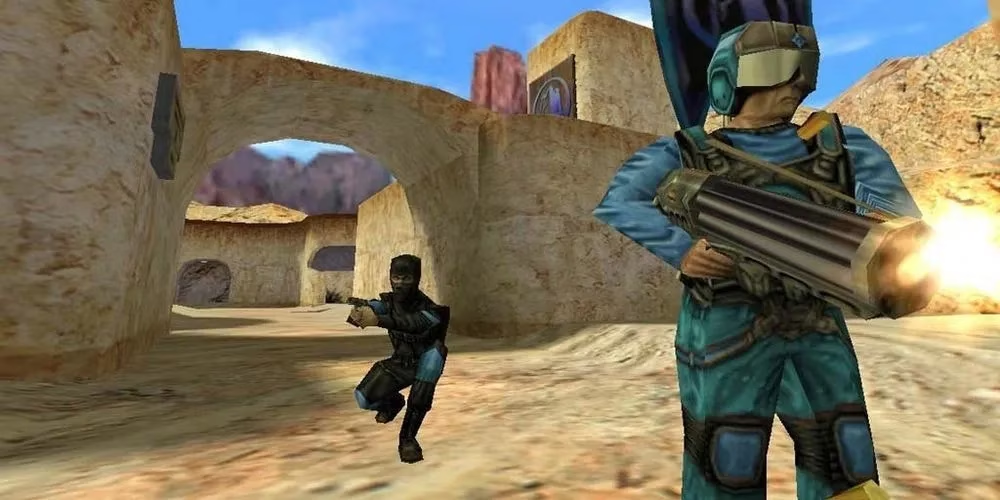
This next one hurts because of how far the series has fallen. If you fire up Team Fortress 2 today, you are met with a bizarre economy of hats and microtransactions. But if you pop in your old PS3 or Xbox 360 copy of The Orange Box, you can still play a purer version of the game. The original Team Fortress Classic mod, however, is a relic that never officially transitioned to modern consoles. A small dedicated community still keeps the servers alive on PC. Is there any hope for those of us who prefer couch gaming? Probably not, but we can dream of reliving the glory days without having to dust off a twenty-year-old laptop.
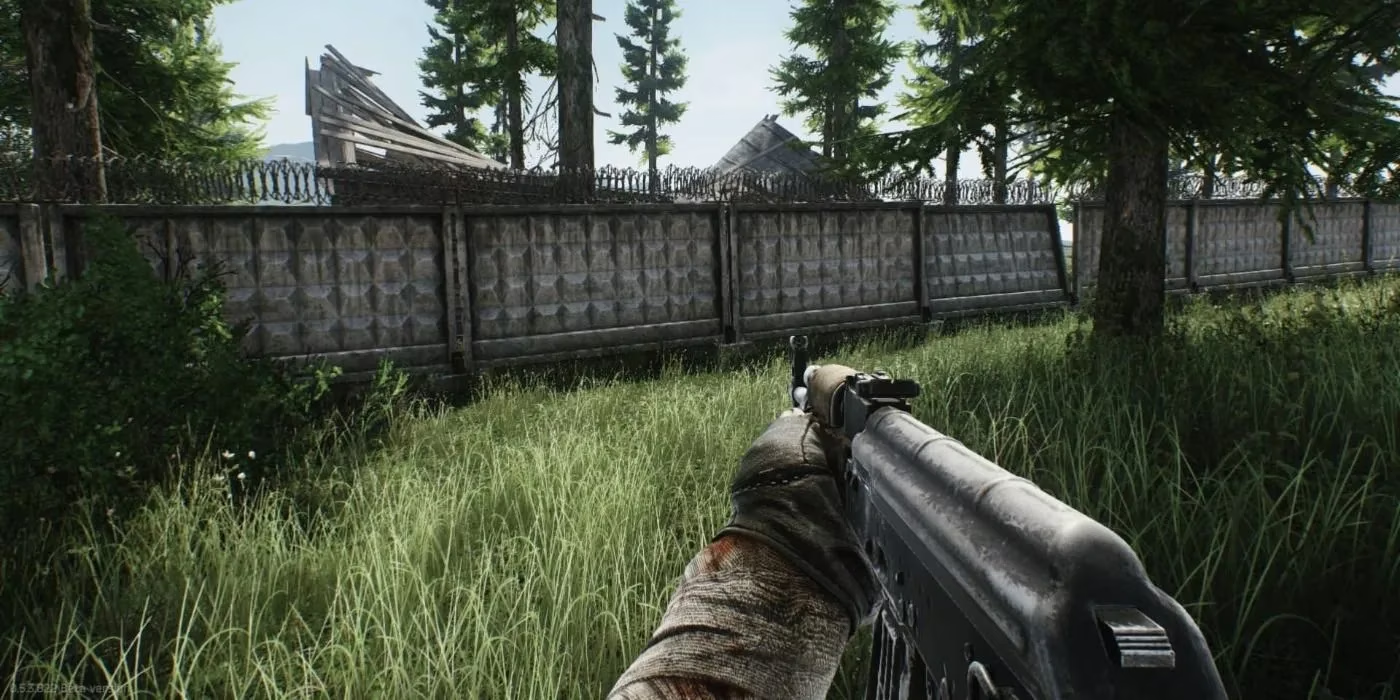
Escape From Tarkov is the outlier of this list because it is technically still evolving. Battlestate Games' brutally unforgiving shooter is not a Battle Royale, but death punishes you just as severely by stripping away almost every item you brought into a raid. The stakes are incredibly high, and the tension of reaching an extraction point while avoiding both AI scavs and rival PMCs is unmatched. Despite being in development for years and boasting a massive audience on PC, a console release has remained a pipe dream. I often ask: is the game's complexity too much for a controller, or is it simply a matter of time before we see a port? Until then, console players will have to settle for the less punishing extraction loops found in other titles.
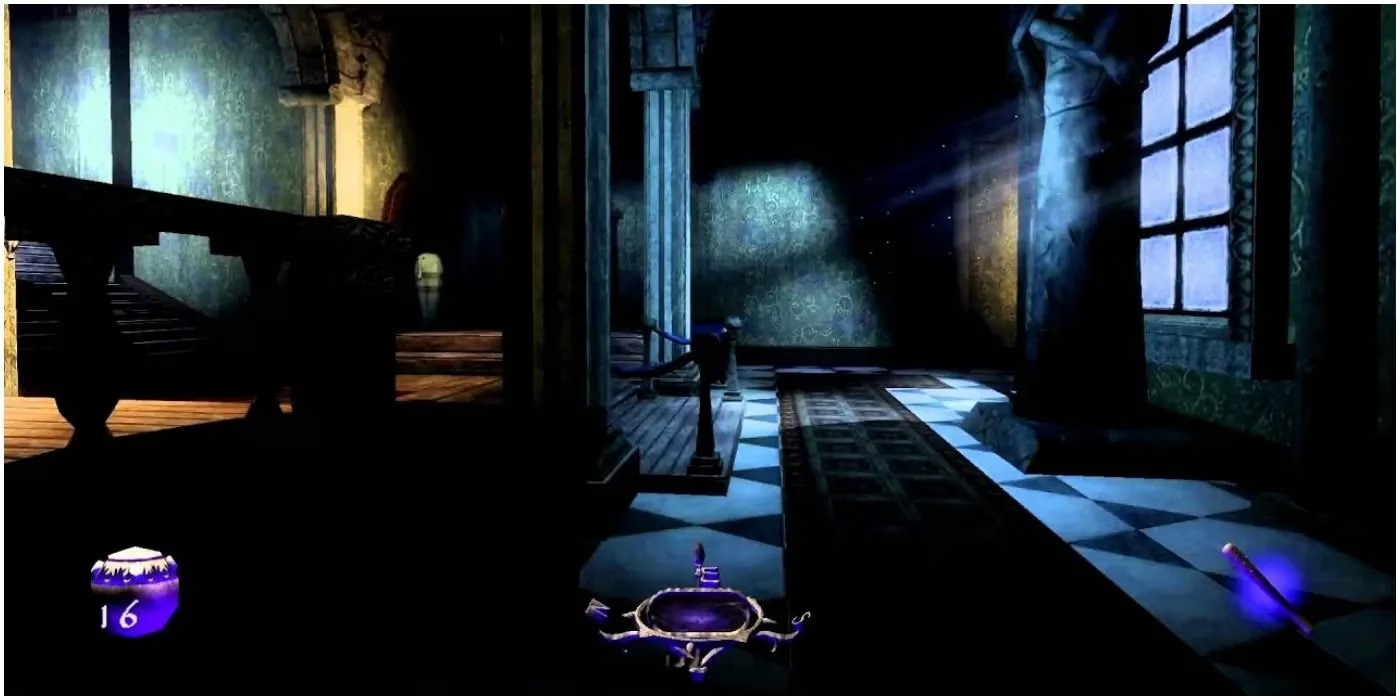
Unfortunately, not every classic has a bright future. Thief was rebooted in 2014 to usher in the current generation, but it failed to make a splash. It did not help that Dishonored did everything Thief did but arguably better, making the reboot feel redundant. The original Thief is a cornerstone of stealth gaming, and its PC exclusivity feels like a grave injustice. However, with the series completely dormant today, the chance of seeing Garrett's debut adventure on modern consoles is astronomically low. Sometimes, history is destined to stay on floppy disks and CD-ROMs.
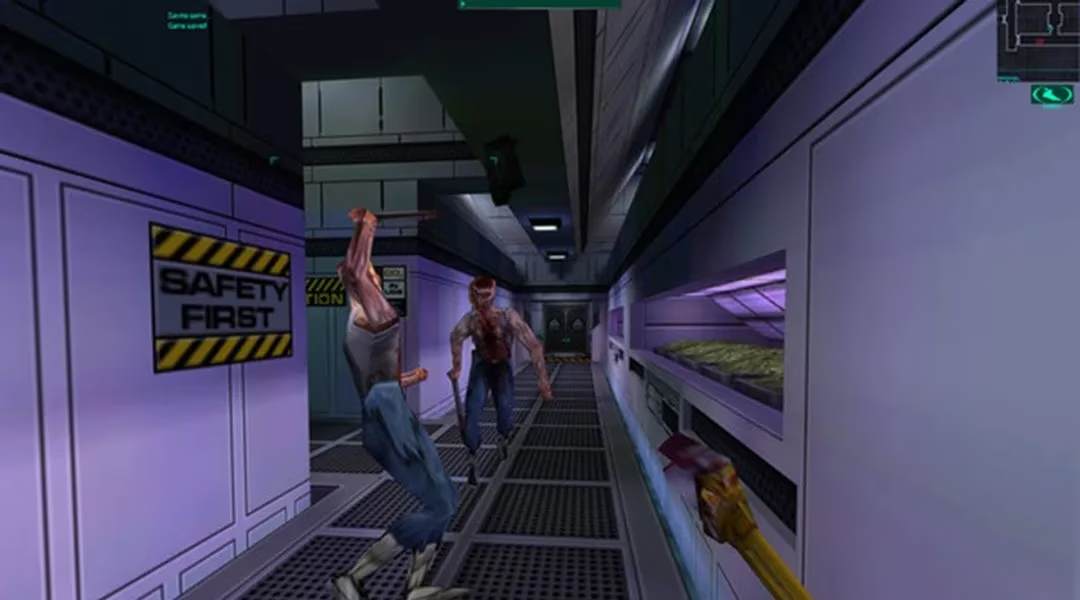
Speaking of stubborn exclusions, Valve is notorious for keeping their best work close to the chest. They refuse to make a Half-Life game unless it pushes the medium forward. Half-Life 2 revolutionized physics, and Half-Life: Alyx is widely regarded as the best virtual reality game ever made. The latter is a brilliant showcase of VR technology, but the powerful hardware required makes a home console version extremely unlikely. It feels similar to the wait PS2 owners endured back in 2004 when they longed for Half-Life 2 while consoles struggled to catch up to PCs. Black Mesa, on the other hand, gives me a sliver of hope. This fan-made remake of the original Half-Life was so good it became an officially endorsed product. Since it evolved from a simple mod to a commercial release, the possibility of it arriving on consoles is more plausible than ever. Experiencing Gordon Freeman's tragic resonance cascade with updated visuals on a big screen would be a treat for everyone.
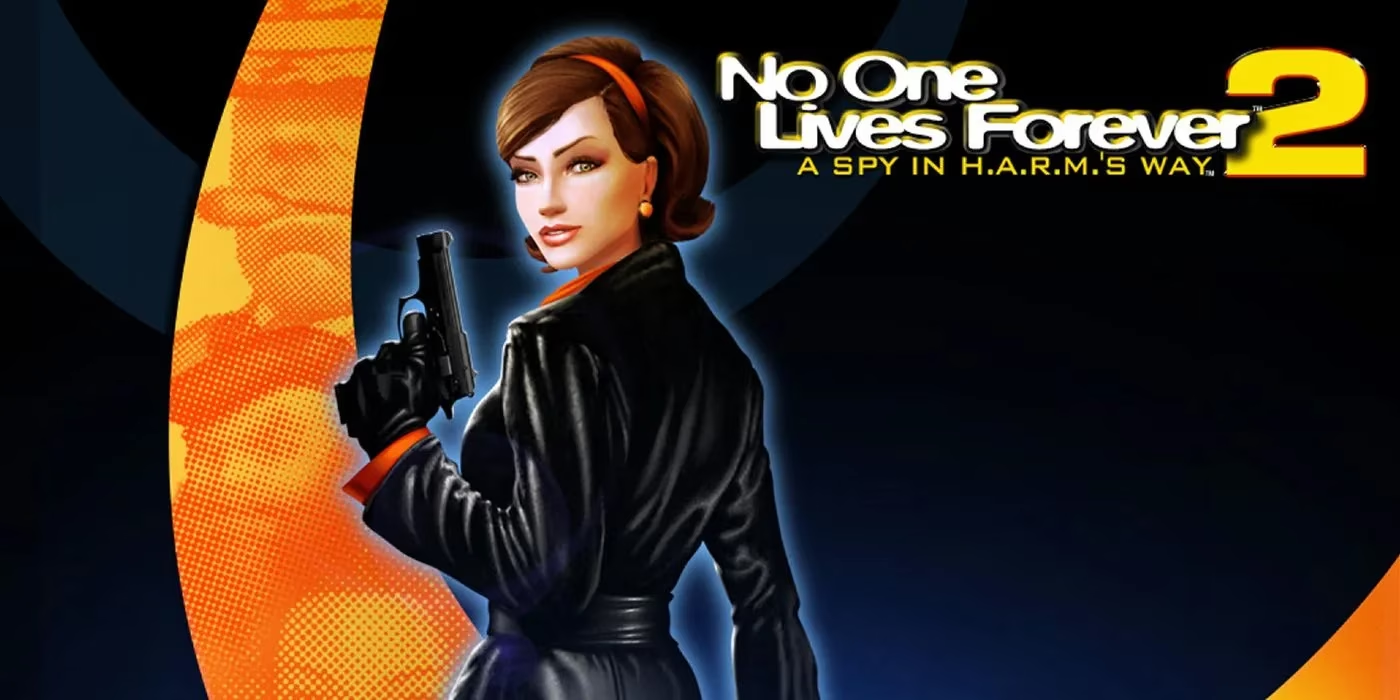
Finally, we must address the tragedy of No One Lives Forever 2. At least the first game saw releases on PlayStation 2 and Xbox, but the sequel is a PC exclusive, and that exclusivity seems permanent. The series is trapped in rights limbo, preventing any form of re-release despite the best efforts of passionate teams wanting to remaster it for modern platforms. With such legal quicksand, it is highly unlikely we will ever see a re-release of this gem on current consoles. What a loss for the industry.
In closing, the gap between PC and console libraries has narrowed dramatically over the last decade, but these ten titles serve as a reminder that we are not fully united yet. Whether it is due to licensing nightmares, technical constraints, or developer indifference, some of the most important first-person shooters remain just out of reach for controller players. Which one would you pick up first if you could snap your fingers and make it appear on your PlayStation or Xbox today?
| Game Title | Likelihood of Console Port | Reason for Exclusion |
|---|---|---|
| S.T.A.L.K.E.R.: Shadow of Chernobyl | Moderate | Technical complexity, but sequel success may spark interest |
| System Shock / System Shock 2 | High for remake, Low for originals | Remake made controls accessible; original code aging |
| Medal of Honor: Allied Assault | Low | Ownership disputes and age of the title |
| Team Fortress Classic | Very Low | Modern TF2 has replaced the classic entirely |
| Escape From Tarkov | Moderate | Still in beta; controls complex for gamepad |
| Thief (Original) | Very Low | Series dormant, overshadowed by Dishonored |
| Half-Life: Alyx | Very Low | Requires high-end VR hardware |
| Black Mesa | Moderate | Official endorsed status opens the door |
| No One Lives Forever 2 | Impossible | Stuck in licensing limbo |
At the end of the day, we are living in a golden age of preservation, but these titles remind us that not every legend gets a victory lap. 🎮✨
Comments