
I still remember the spring of 2022 like it was yesterday. The air was thick with the tension of back-to-back raids, my PMC huddled behind a rusted shipping container on Customs, squinting into the pixelated shadows. Escape from Tarkov was already infamous for its unforgiving realism and nightmarish difficulty, but one thing kept breaking my immersion: the visual noise that could hide a fully kitted enemy one meter away. Back then, rumors swirled that Battlestate Games was about to drop Nvidia's DLSS into our laps. I couldn't have been more thrilled.
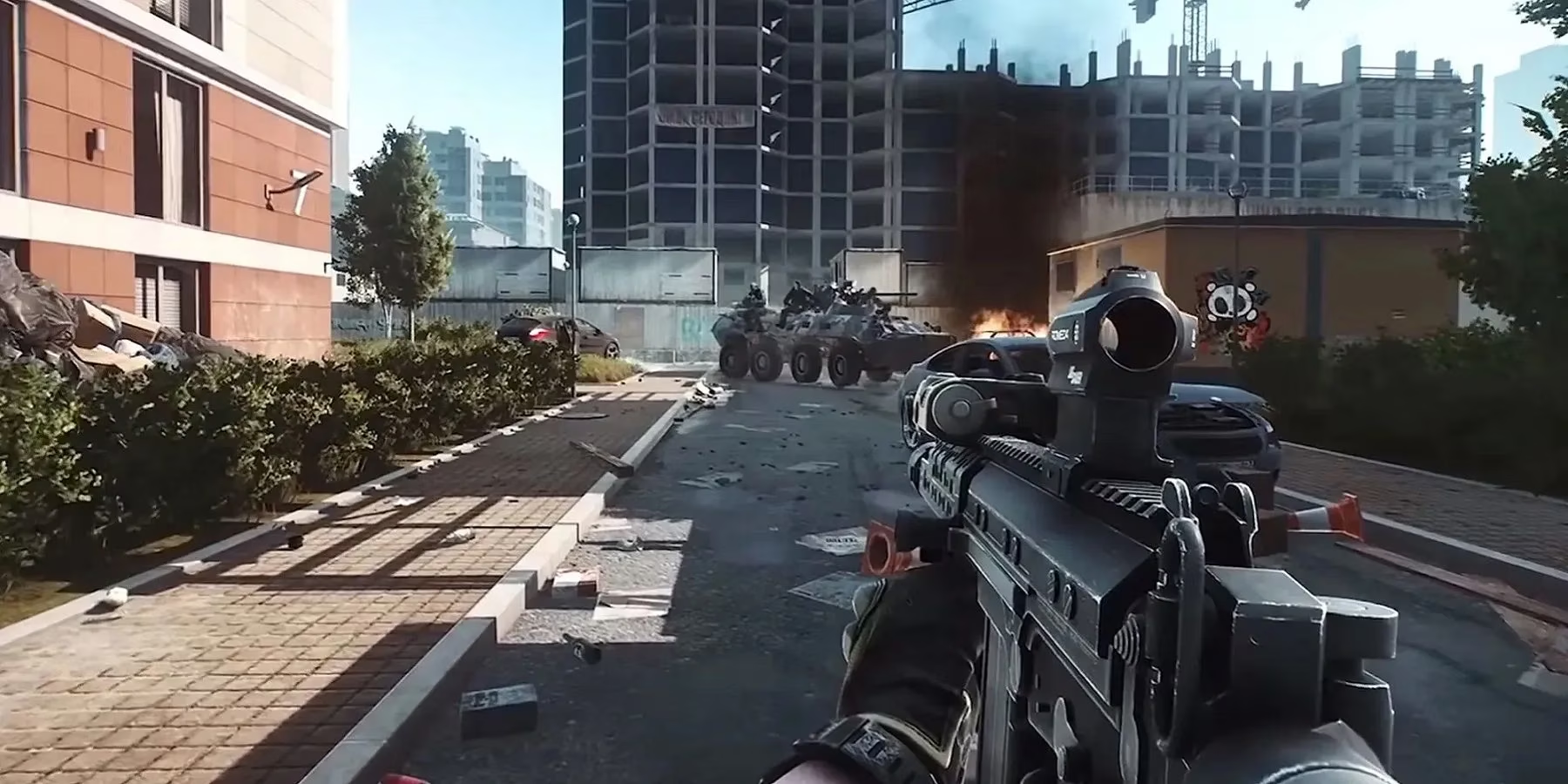
The announcement through a WCCFTech report and Nikita Buyanov's Twitch stream felt surreal. An upscaling technology like DLSS coming to Tarkov? The game that punished you for breathing? But yes, four options were shown: turn DLSS off, or pick from quality, balanced, or performance modes. I remember installing that patch, my heart pounding. The "passed the testing phase" words echoed in my head. When I finally dropped into Interchange with DLSS on Quality, it was transformative. The glare of fluorescent lights didn't wash out distant shelves anymore. I spotted a scav slipping past the idea store with a clarity I’d only dreamed of. That update single-handedly redefined my mid-wipe strategy.
As weeks turned into months, the visual tech arms race kept accelerating. Word that AMD's FidelityFX Super Resolution (FSR) might arrive someday made me hope that low-end rigs would get their due. By the time the year ended, ray tracing had also been teased, making every reflection in puddles a potential tactical advantage. Fast forward to 2026, and I'm still deep in the Tarkov grind, but now both DLSS 3.5 and FSR 2.0 are fully integrated. The upscaling has evolved beyond frame rate boosts—AI denoisers clean up motion artifacts, and frame generation can push me past 140 FPS even during a chaotic Resort firefight. The once-jarring fence textures are now razor sharp, and the Northern Lights on Lighthouse look so real I sometimes forget to watch my six.
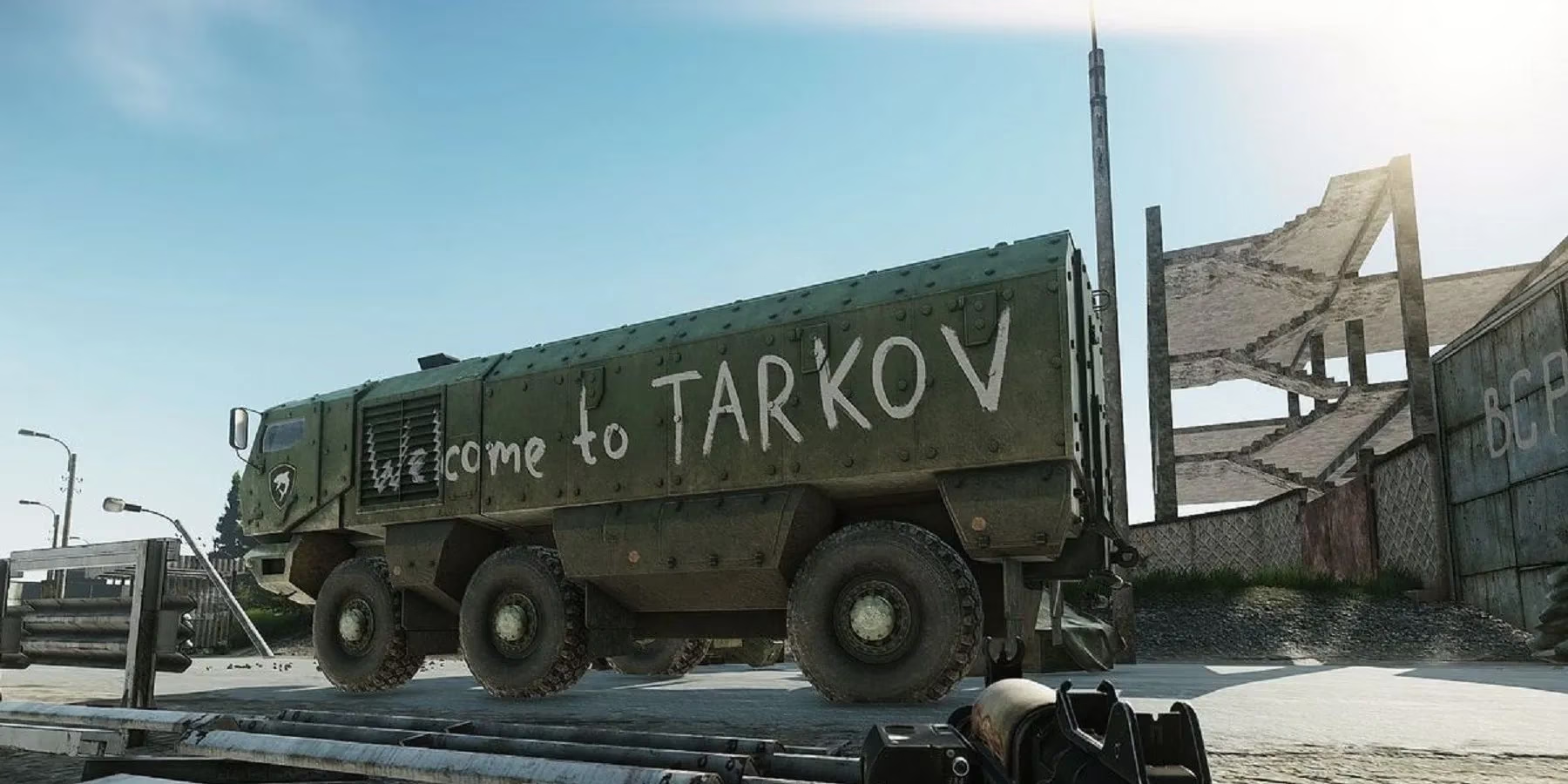
Let me tell you about last week. I was on Woods, lugging a Mechanic task item toward the truck near the sawmill. The rain was a miserable drizzle, and usually that meant enemies blended into the treeline. But with DLSS set to Balanced and my settings dialed in, I caught the faint shimmer of an optic lens through the leaves—an enemy sniper prone on the ridge. My heart lurched. Without that visual clarity, I'd be staring at the death screen by now. I rotated, flanked, and dropped the poor soul with a single clean headshot. Moments like that are why upscaling isn't just eye candy in a hardcore survival sim; it’s a survival tool. Even the armored truck that sometimes spawns near the USEC camp was so detailed I could spot the bullet holes from a previous encounter, which gave me context about nearby player activity.
Other games adopted these technologies too, but Tarkov’s implementation taught me a lot about the industry’s direction. Red Dead Redemption 2’s DLSS upgrade was a marvel, yet the stakes there were never quite the same. In Tarkov, losing gear to a blurry silhouette versus a crisp, fair engagement is night and day. The dev team understood that visual clarity isn’t about making the game prettier—it's about respecting the player’s time and investment. That’s why I’ve stuck around through wipes and meta changes. Seeing Escape from Tarkov move from a closed beta in 2017 to a title that embraces AI-powered upscaling and ray-traced ambience in 2026 has been a privilege. Who knows what comes next? Maybe neural rendering that predicts enemy movement before I even see it. One thing’s for sure: I’ll be in the queue, heart racing, ready for another raid.
Comments