
I still remember the chill that ran down my spine when that email from Unity arrived in my inbox on October 3, 2025. As a game developer who has relied on Unity since 2018, the subject line about a "significant vulnerability" immediately set off alarm bells. The message was clear: any game built with Unity Engine versions from 2017 onward contained a security flaw that could potentially expose players' sensitive information. My mind instantly raced to the three titles in my portfolio that needed immediate attention.
The Scope of the Problem
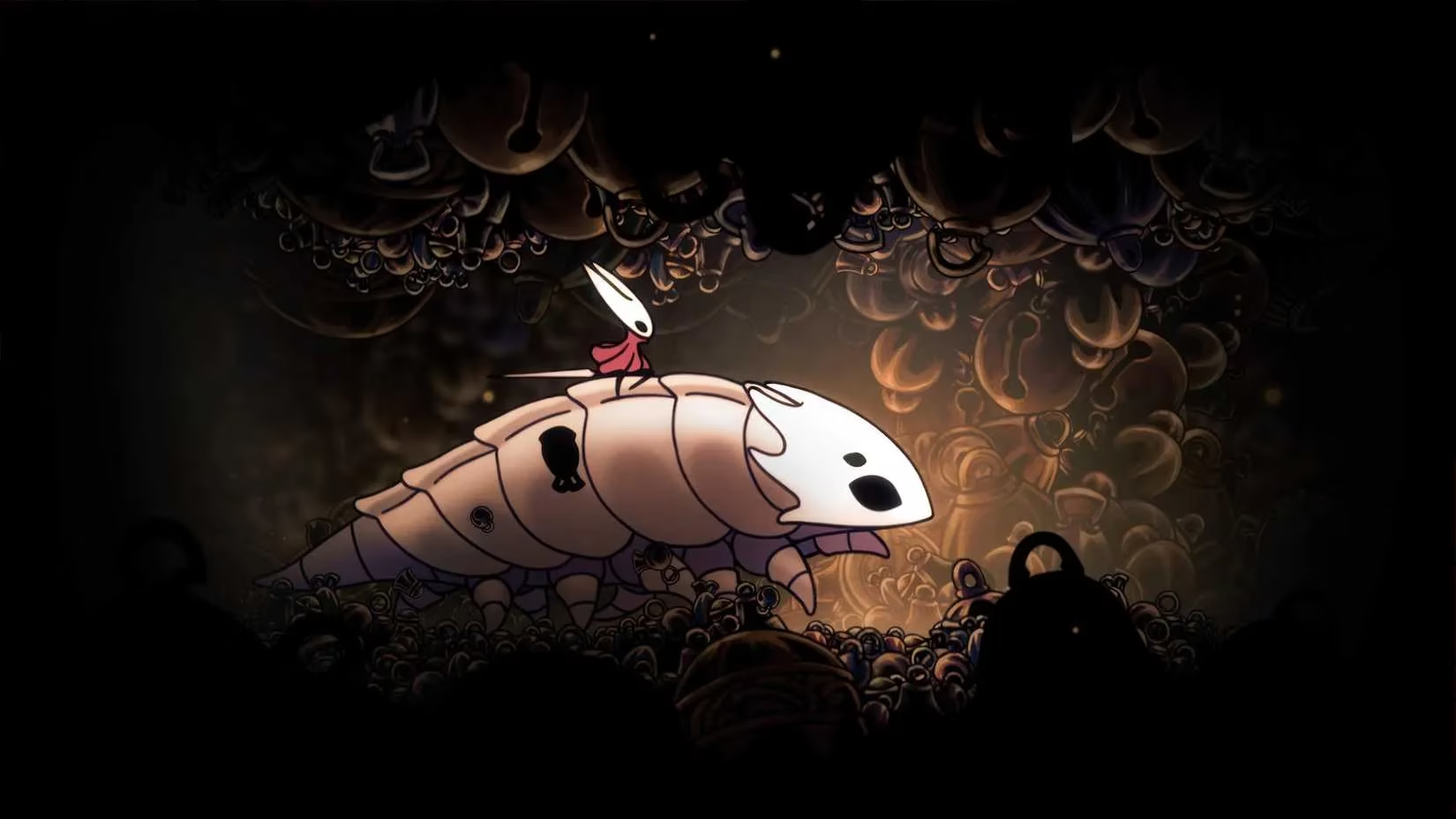
Unity has been my engine of choice for years, powering incredible games across PC, mobile, and console platforms. From indie darlings like Hollow Knight: Silksong to massive hits like Among Us, Unity's versatility made it the backbone of my development workflow. The engine's journey hasn't been smooth lately—the 2023 Runtime Fee controversy pushed many developers toward alternatives like Godot and Unreal Engine. Thankfully, Unity reversed course in 2024 after industry-wide backlash, returning to a more traditional subscription model while keeping Unity Personal free for smaller developers like myself.
But this vulnerability was different. This wasn't about business models or pricing—this was about player security. The flaw existed in Unity's Runtime code, affecting games on Windows, Android, Linux, and macOS. An attacker could potentially exploit this weakness to access sensitive information from players' devices. The silver lining? Unity had already prepared fixes and confirmed no evidence of actual exploitation. Microsoft Defender could detect and block the vulnerability on Windows, and Valve had implemented Steam Client protections.
The Development Community Responds
I wasn't alone in this scramble. The entire Unity development community sprang into action. Obsidian Entertainment made the drastic decision to temporarily remove major titles like Grounded 2, Pentiment, Avowed, and Pillars of Eternity from digital storefronts. Their statement resonated with me: they wanted to protect customers and ensure proper testing of security fixes. Meanwhile, other studios like Innersloth (Among Us) and Second Dinner (Marvel Snap) had already deployed updates.
My own experience mirrored this industry-wide response:
🔴 Emergency Assessment Phase (Day 1)
-
Inventory all active Unity projects
-
Identify affected engine versions
-
Prioritize games by player count and sensitivity
🟡 Patch Implementation (Days 2-4)
-
Apply Unity's provided security fixes
-
Test compatibility with existing game code
-
Ensure no gameplay functionality broken
🟢 Quality Assurance (Days 5-7)
-
Rigorous security testing
-
Performance validation
-
Multi-platform verification
The Personal Toll
The emotional rollercoaster was intense. For seven straight days, my team worked around the clock, fueled by coffee and the urgency of protecting our players. We maintained constant communication with our community through Discord and social media, transparently explaining the situation and our progress. The support from players was overwhelming—they understood the importance of security over immediate availability.
What made this situation particularly challenging was the sheer breadth of Unity's ecosystem. The engine powers everything from mobile casual games to AAA experiences across multiple platforms. The list of potentially affected titles seemed endless, and we knew many smaller indie developers without dedicated security teams would struggle with the patching process.
Lessons Learned and Moving Forward
This incident taught me several crucial lessons about modern game development:
| Lesson | Implementation |
|---|---|
| Security First | Regular security audits now part of our development cycle |
| Community Trust | Transparent communication builds stronger player relationships |
| Update Preparedness | Maintain update pipelines for rapid response to emergencies |
Looking ahead, the Unity ecosystem appears resilient. The swift response from both Unity Technologies and the development community demonstrates our collective commitment to player safety. While the coming weeks will see more games receiving updates, the coordinated effort has been impressive.
As I finally deployed the last security patch for my games, I reflected on how this event strengthened our development practices. The vulnerability scare of 2025 will likely lead to better security standards across the entire industry. For now, I'm just grateful that we caught this early and that our players remain protected. The unity in Unity's community has never been more apparent—we look out for each other, and most importantly, we look out for our players.
Comments