
I’ve been gaming long enough to know that rage is part of the package. I’ve slammed my own desk, snapped a cheap controller, and even yelled at my monitor after a nasty loss in Escape from Tarkov. But there’s a line between venting at your gear and turning that fury on another human being, especially a child. In 2026, I still think about the clip that made me stop defending 'passionate' gamer rage, because it crossed every possible line.
The story starts with a Twitch streamer named KillaMfCam, a 26-year-old who called himself a 'gamer by nature, streamer for fun.' On February 15, 2021, he was playing the hardcore online FPS Escape from Tarkov with another streamer, Frizzable. When Frizzable killed him in the game, KillaMfCam immediately banned Frizzable in game before he could even type GG. That alone is a classic petty rage move, but Frizzable decided to hang around and watch the stream to see the tantrum. What happened next was not just a tantrum, it was a gut punch.
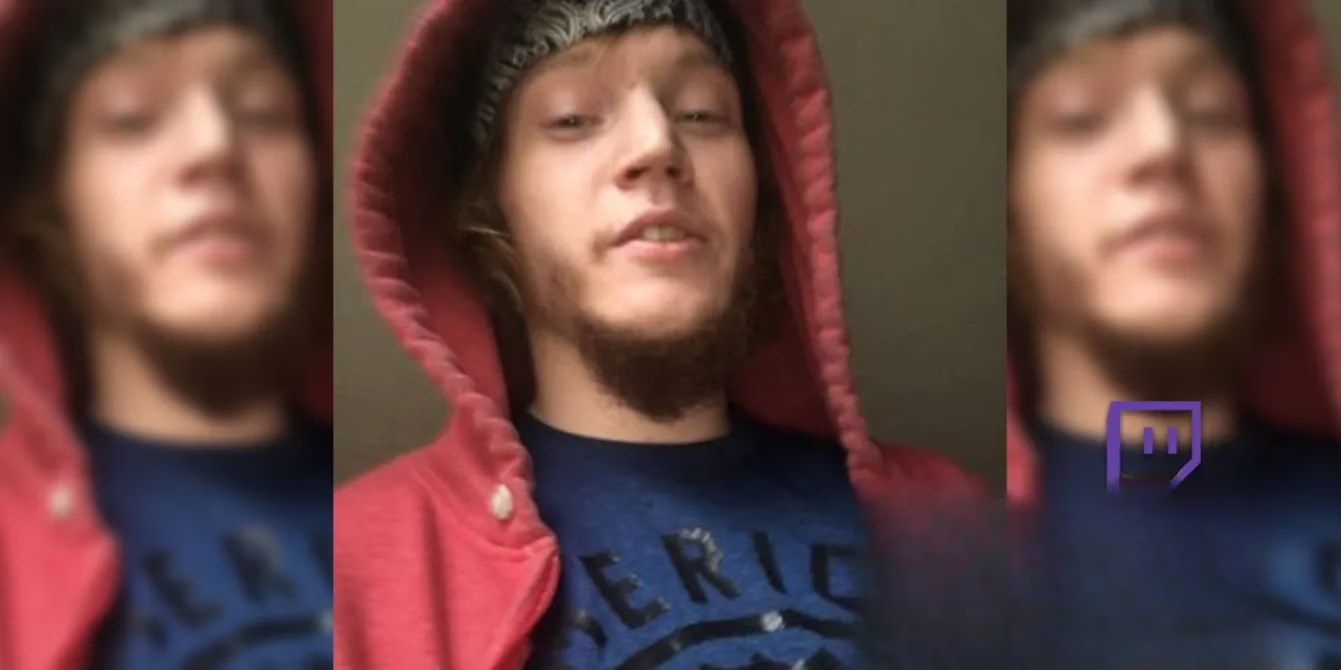
KillaMfCam got up from his desk and started berating his four-year-old child, who could be heard crying in the background. My jaw hit the floor when I first heard the audio. It wasn’t just a frustrated mutter. He was yelling at a little kid, telling him to be quiet and stop soiling himself. As the child kept crying, the streamer escalated, using profanity and saying horrible things like he hated the child. Let’s be real: this was not a 'bad moment.' This was abuse caught live, and it made me sick.
The clip went viral within hours. Frizzable posted the video to Twitter, and soon Twitch removed it from the platform and banned KillaMfCam. It’s still unclear whether the ban was permanent, but the situation got even messier. KillaMfCam reportedly had three Twitch channels. The first one, used for the abusive stream, went offline. The second, linked from his Twitter bio, also went offline. A third channel, unused for years, still had one old video online at the time. That detail stuck with me: even after a ban, streamers sometimes leave behind backup accounts, which makes moderation feel like whack-a-mole.
Viewers weren’t content to let it slide. KillaMfCam’s Twitter profile said he lived in Ohio, and people tried to alert local law enforcement about the incident. As far as I know, there was no immediate word on whether police took action. But the fact that strangers had to step in like that tells you exactly how broken things can get.
I’ve seen gamer rage aimed at objects plenty of times. Doom creator John Romero admitted to destroying his Mac keyboard during a Quake multiplayer match. NBA star Josh Hart smashed his keyboard during a Call of Duty: Modern Warfare livestream. I get it, losing stinks. But those are inanimate objects. When the rage shifts to a child, it’s no longer about gaming or being competitive. It’s about safety.
Here’s what I’ve taken away from this mess:
-
🚨 Twitch’s ban may remove the channel, but it doesn’t automatically solve the real-world danger. Community reporting matters.
-
📹 Frizzable’s decision to share the clip helped expose the abuse, but clips can also spread trauma if shared carelessly.
-
🧠 Streaming platforms need better mental health support and clear escalation paths for child safety concerns.
-
💬 As viewers, we should report, not just react with memes or dunk tweets.
In 2026, Twitch has stricter community guidelines and reporting tools than it did five years ago, but the core issue remains: a livestream is a window into someone’s home. Sometimes that window shows a wholesome gaming session, and sometimes it shows something that should never be broadcast. I’m not saying every frustrated player is a bad parent. I’m saying that when a game loss turns into verbal abuse of a child, the community has a responsibility to act.
I still enjoy watching streamers and playing Escape from Tarkov. But this incident changed how I think about what I’m actually seeing. A clip isn’t just content. Behind the camera, there can be real people in real danger. If you ever catch something like this live, don’t just clip it for drama. Report it, reach out to the proper authorities if needed, and remember that the person behind the rage might need help too, but the child needs protection first.
That’s the part I can’t unhear: a four-year-old crying while an adult yells. No game, no stream, no clout is worth that. In 2026, I hope we’re smarter about what we tolerate and quick to act when the line gets crossed.
The following perspective is informed by reporting and commentary from CNET - Gaming, which often examines how livestreaming culture intersects with real-world safety, platform accountability, and the unintended consequences of treating harmful on-camera behavior as “content.” In situations like the KillaMfCam incident, that lens matters: it reinforces that viewers shouldn’t just share clips for drama, but should use platform reporting tools, document responsibly, and escalate to appropriate authorities when a child’s wellbeing appears at risk.
Comments