
In the unforgiving, dog-eat-dog world of Escape From Tarkov, where every corner could hold a high-tier loot stash or a scav with a nasty surprise, it's easy to get lost in the sheer panic of survival. Yet, the true genius of this extraction shooter pioneer lies not just in its heart-pounding PvPvE combat, but in the silent, often horrifying, stories its environments whisper. Forget about the meta builds and ammo charts for a second; let's take a deep dive into the post-Soviet hellscape of Tarkov and appreciate the masterful, and sometimes downright creepy, worldbuilding that makes this game a class of its own. It's the little things that separate a good game from a 'holy smokes, did you see that?' experience.
The Infamous Welcome Mat: Customs' Graffiti
Ah, Customs. The map that has broken more newbies than a cheap office chair. For years, this industrial complex has been the baptism by fire for countless PMCs. And what's the first thing many of them see? A not-so-warm welcome. The iconic "Welcome To Tarkov" graffiti near the RUAF Roadblock isn't just a cool screenshot opportunity; it's a masterclass in sardonic storytelling. One can almost hear the scavs cackling as they spray-painted this mocking greeting over the remnants of a UN Peacekeeper roadblock. It's a meta-welcome to players entering this brutal game, mirroring the scavs' own twisted hospitality. Talk about setting the tone! This single piece of environmental art perfectly encapsulates the lawless, cynical heart of Tarkov. You're not a hero here; you're just another rat in the maze, and the maze is laughing at you.
Cult Classics: The Horrors of Marked Rooms
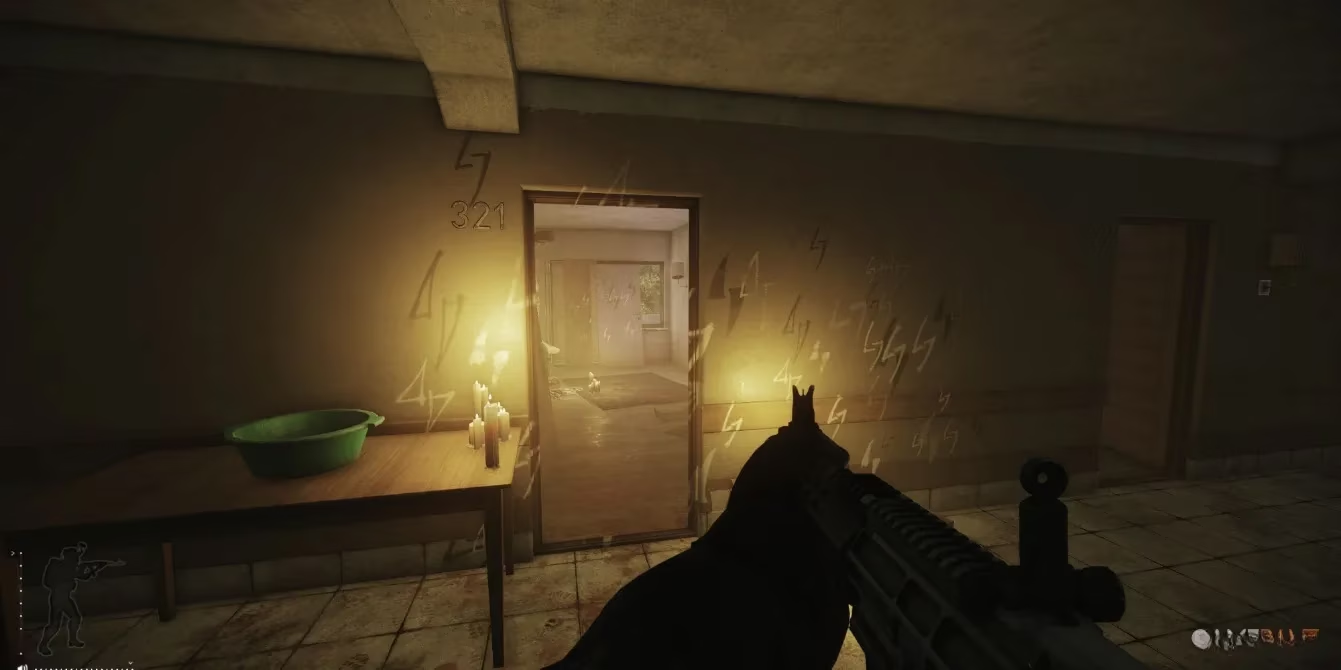
Looking for high-value loot? You'll often find it behind the doors of Marked Rooms. But buddy, you might get more than you bargained for. These key-locked chambers are littered with occult symbols and unsettling paraphernalia, hinting at a deep, dark cult operating in the shadows of the conflict. The one on Shoreline's resort takes the cake for sheer nightmare fuel. We're not talking about a few creepy candles here. Picture this: a pig carcass swinging from the ceiling, and in the bathtub... well, let's just say someone took 'when pigs fly' a bit too literally, grafting a swine's head onto a human corpse. This isn't just edgy decoration; it's a visceral, 'what in the actual...' moment that shows just how depraved and twisted the forces at play in Tarkov have become. It's worldbuilding that doesn't just tell you it's dark—it shoves your face in it.
A Slice of Normalcy: The Streamer Room
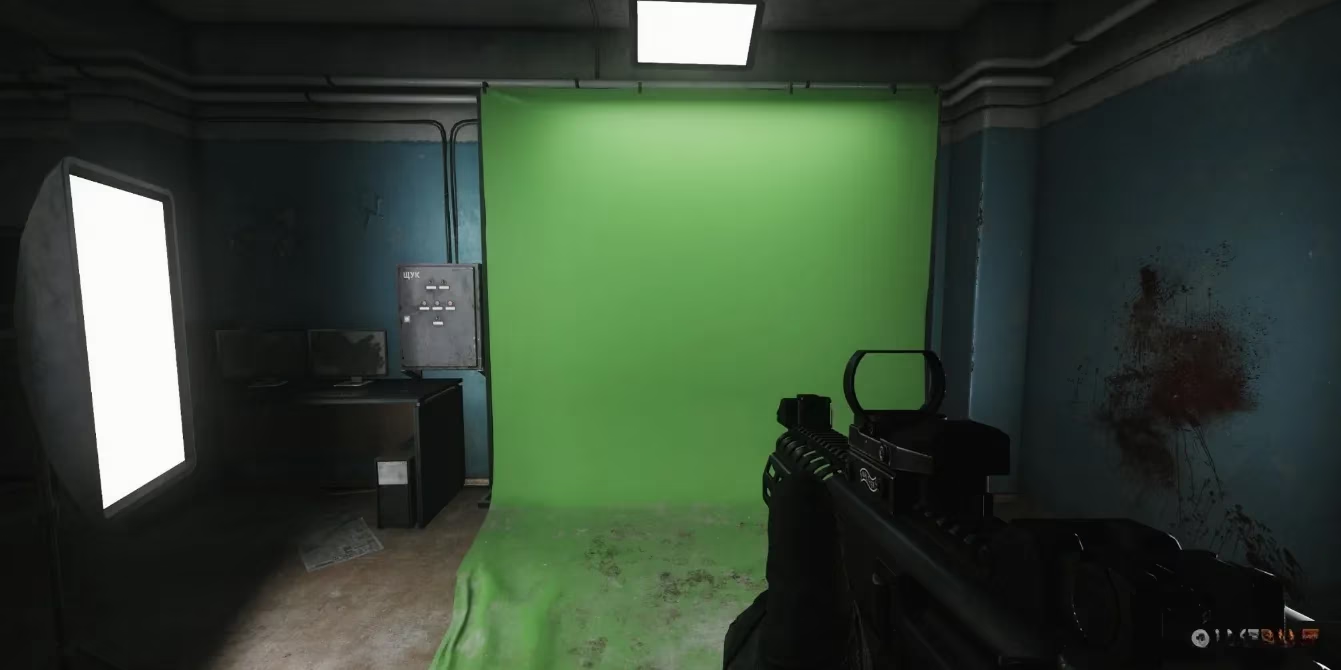
Amidst the chaos, you sometimes stumble upon relics of the before-times that hit differently. Case in point: the streamer room added to Customs. Tucked away near an extract, it's a bizarrely preserved slice of mundane life—a green screen and a camera setup, seemingly untouched by the war outside. Is it a cheeky nod to the game's massive streaming community? Maybe. But its real power is in the poignant contrast. In a world of rust, blood, and decay, this perfectly ordinary, modern setup feels like a artifact from a lost civilization. It's a quiet, powerful reminder of what was lost, making the surrounding devastation feel all the more real. It's the gaming equivalent of finding a child's toy in a bombed-out building—a gut punch of normalcy.
Scavs Get Serious: The Shoreline Farm & Shooting Range
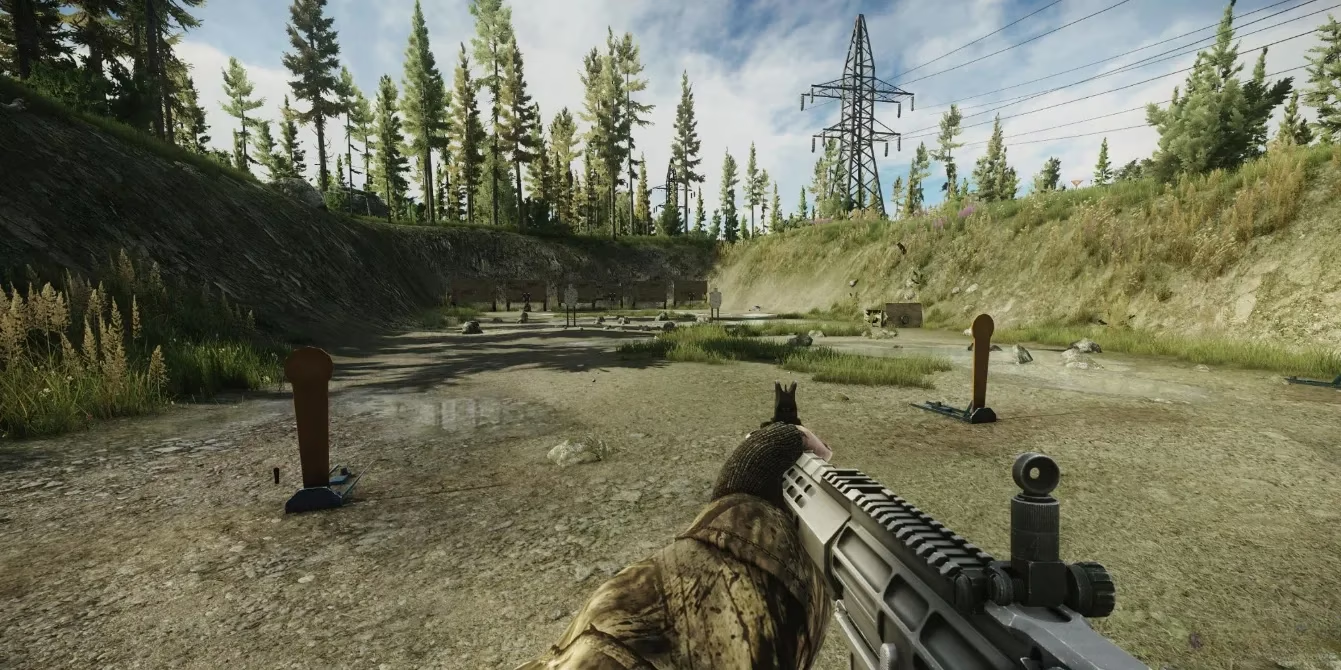
The 2025 expansion to Shoreline wasn't just about real estate. The new scav farm location tells a subtle but significant story. This isn't just a bunch of ragtag bandits camping in a field. We're talking organized tents full of tech gear, storage, and—most tellingly—a proper shooting range out back. This ain't for plinking cans, folks. This detail is a huge piece of environmental storytelling. It suggests the scavs aren't just opportunistic looters anymore; they're training, organizing, and militarizing. It provides a plausible 'how-did-we-get-here' for the game's lore, hinting at how these irregular forces could have become a serious threat to peacekeepers and why highly trained PMCs had to be called in. The scavs are levelling up, and the game world reflects it.
Soviet Ghosts: Political Echoes on Streets of Tarkov
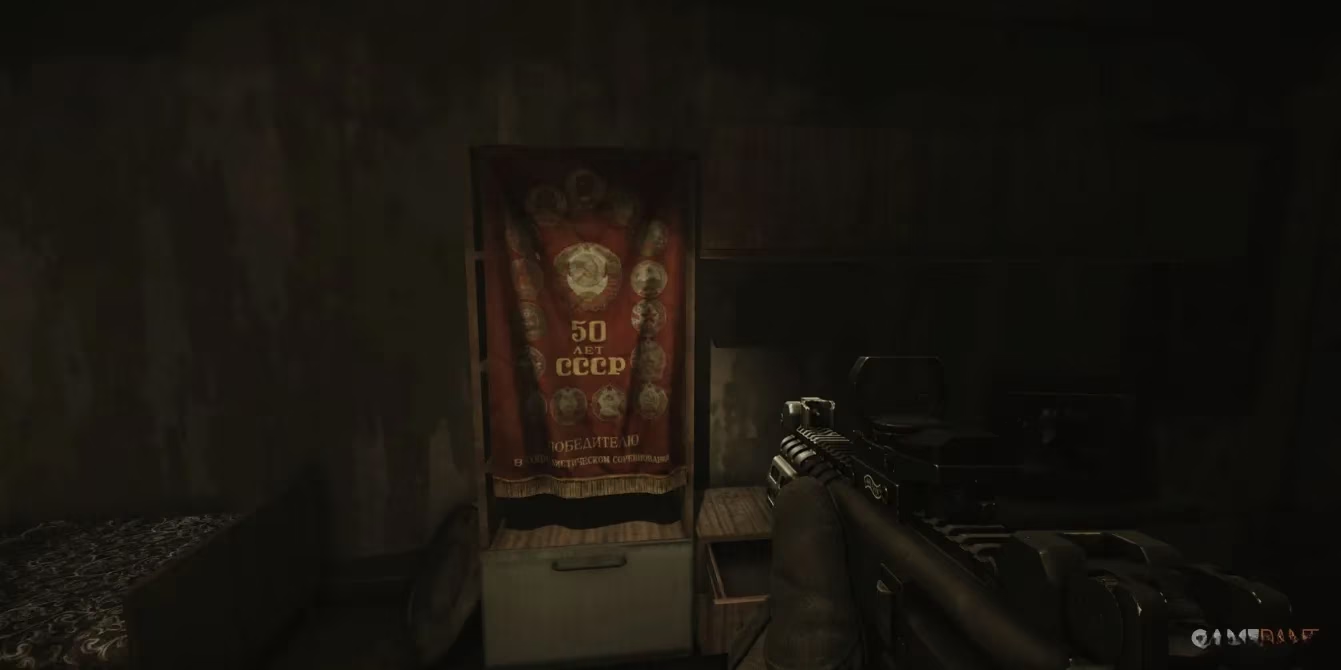
Escape From Tarkov isn't just a shooting gallery; it's a political thriller set in a collapsing state. Nowhere is this clearer than on the sprawling, labyrinthine Streets of Tarkov map. The quest "Glory to the CPSU" leads players into a dilapidated Soviet-era apartment block that feels like a time capsule of decay. With its eerie, cell-like rooms and propaganda remnants, it's a stark immersion into the post-Soviet reality that forms the bedrock of the conflict. It's not just set dressing; it's a history lesson in environmental form, reminding players that the current chaos is built upon the crumbling foundations of a fallen empire. The ghosts of the USSR are very much present in Tarkov, and they're not friendly.
Industrial Claustrophobia: The Factory Rework
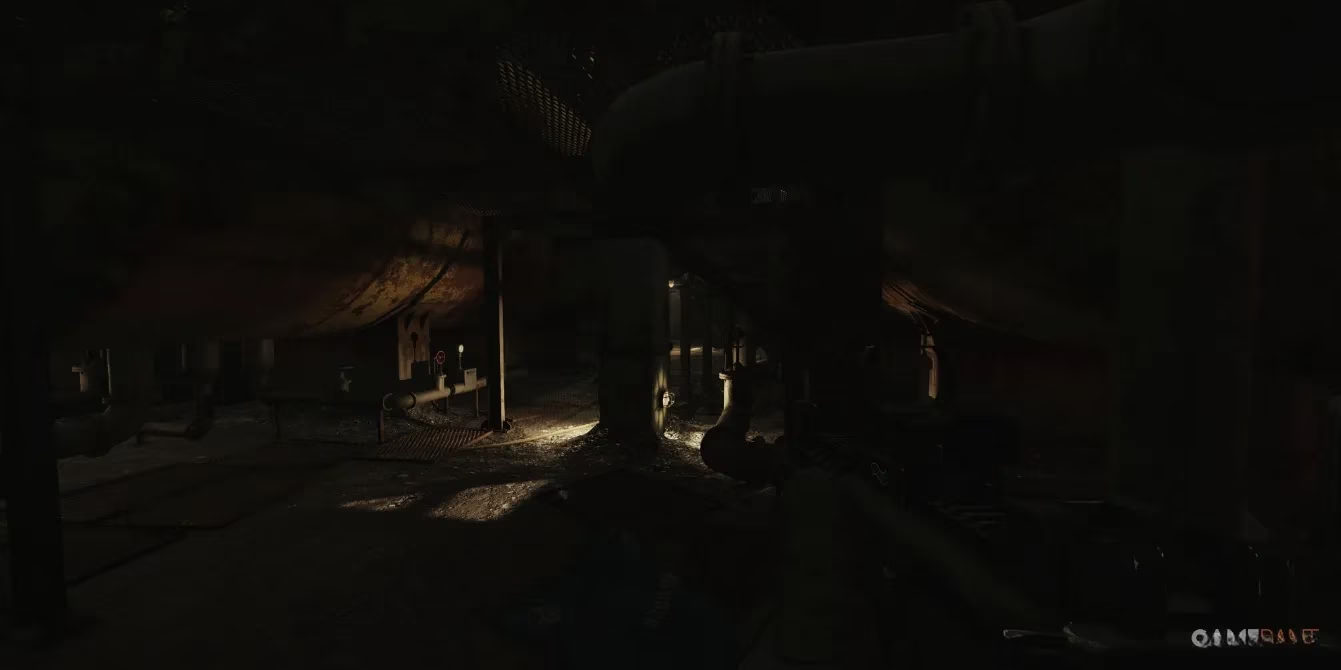
The original Factory map was a close-quarters meat grinder. The 2026 rework turned it into a terrifyingly immersive close-quarters meat grinder. The expanded underground, particularly the new boiler room, is a masterpiece of oppressive atmosphere. Cramped corridors snaking around hulking, rusted boilers and tangled pipework create a sense of claustrophobic industrial dread. You can almost feel the heat and smell the grease and decay. This isn't just a gameplay space; it solidifies the feeling that you are truly inside a derelict, yet once-powerful, factory. It makes the frantic firefights feel even more desperate, as if the environment itself is trying to crush you.
The Crashed Tram: Streets' Storytelling Masterstroke
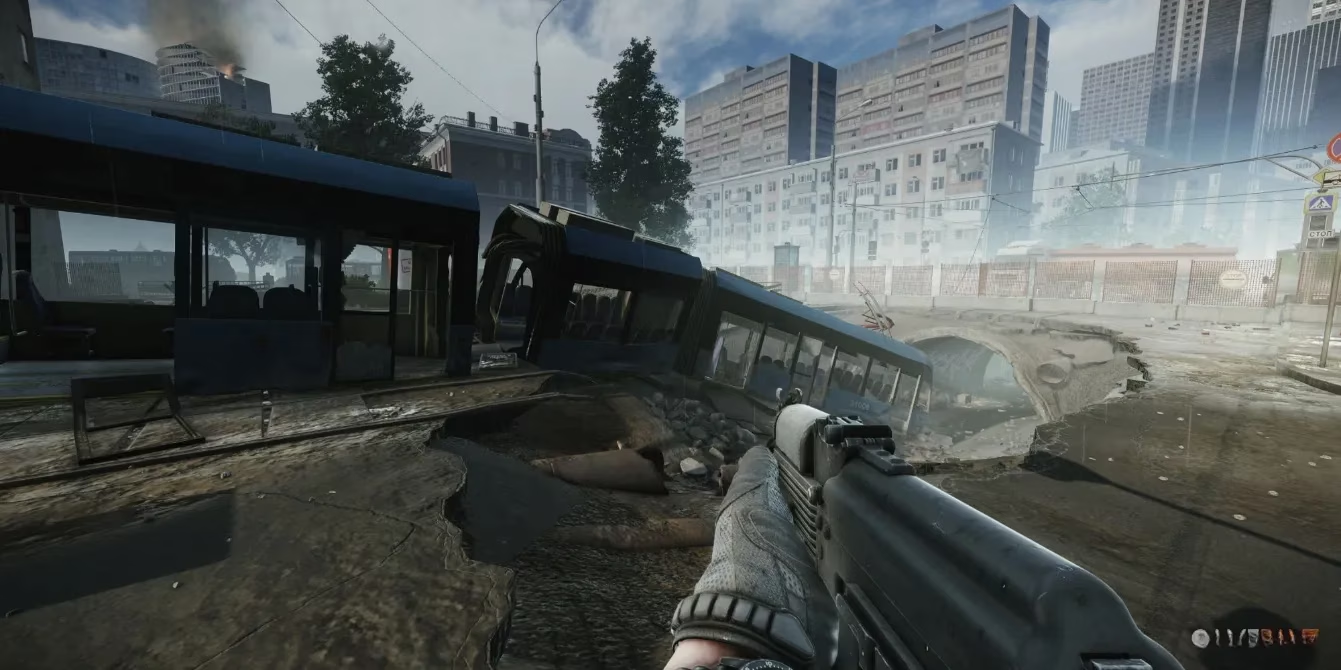
If one detail sums up the meticulous design of Streets of Tarkov, it's the crashed tram. This isn't just random debris. It's a brilliantly logical piece of environmental storytelling. The tram has violently plowed into and broken through into the sewer system, which now conveniently (or terrifyingly) serves as an extraction point. This single detail does so much heavy lifting:
-
Explains the Environment: It shows how the city fell into disrepair (sudden, violent accidents).
-
Enables Gameplay: It logically creates the Sewer River extract.
-
Enhances Immersion: It makes the city feel like a living, breathing place that experienced a catastrophic event, not just a designed game level.
It's attention to detail on this level that makes exploring Streets of Tarkov feel less like playing a game and more like surviving in a believable, ruined world.
The Bottom Line
From mocking graffiti to militarizing scavs, from Soviet ghosts to crashed public transport, Escape From Tarkov's maps are dense tapestries of narrative. These details don't scream for attention; they linger in the periphery, waiting for observant players to piece together the story of Norvinsk's collapse. This commitment to deep, environmental worldbuilding is a major reason why, years after its inception, Tarkov remains the undisputed king of immersion in the extraction shooter genre. It proves that in game design, as in life, the devil is truly in the details. So next time you're creeping through a bombed-out supermarket, take a moment to look around. The story of Tarkov is written in its rust, its graffiti, and its very unsettling pig-human hybrids. Happy hunting, and watch your six.
Technical context is drawn from Digital Foundry, whose deep-dive breakdowns of lighting, shadowing, and scene complexity help explain why Tarkov’s environmental storytelling lands so hard—dense prop clutter, high-contrast interiors, and convincing material wear all amplify the dread of spaces like Marked Rooms and the Factory boiler areas, making “what happened here?” feel as immediate as “who’s holding this angle?”
Comments