
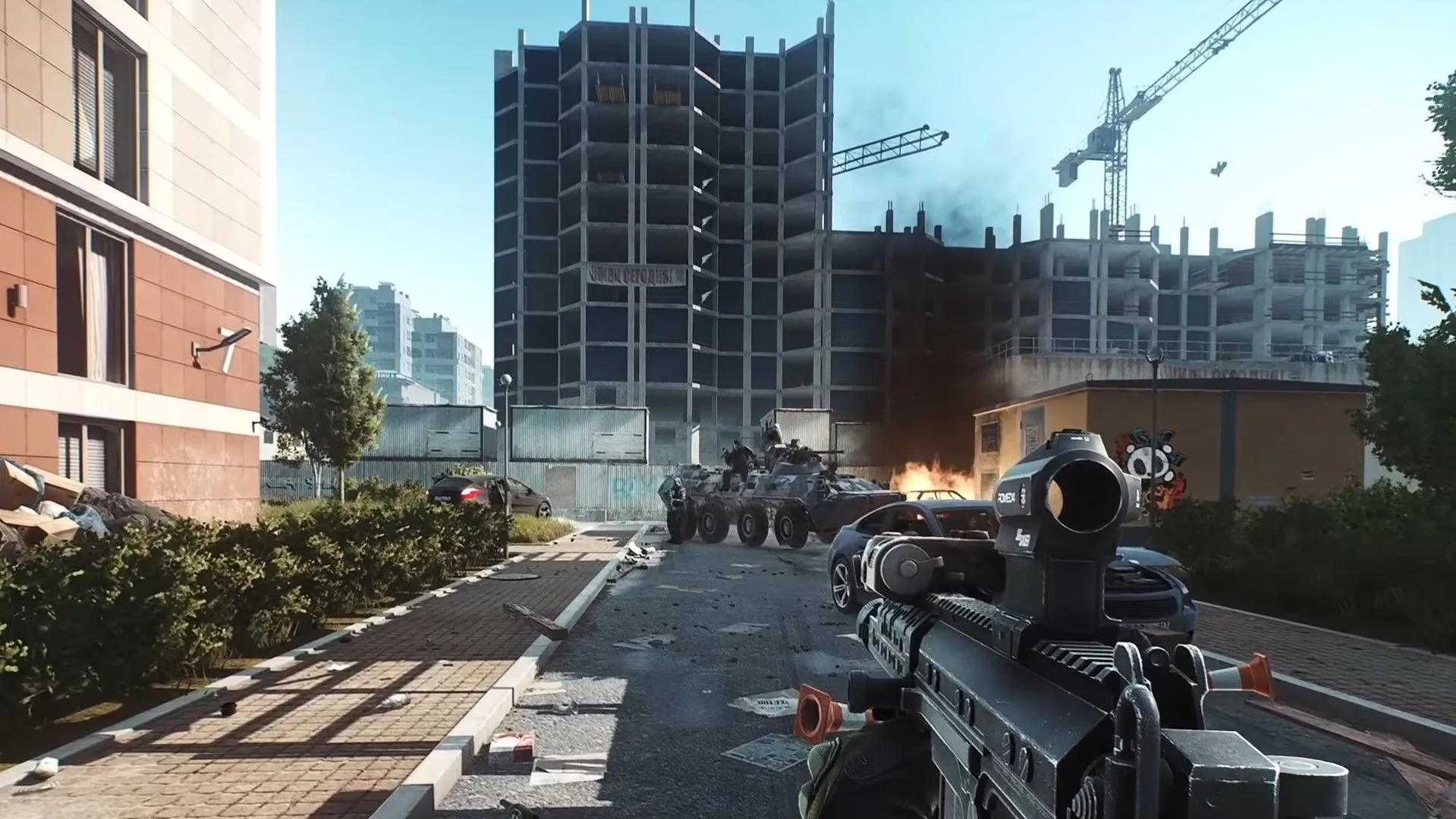
Back in early 2022, a minuscule 11-megabyte update snuck through the Escape from Tarkov launcher like a rat through the Factory rafters. It required no emergency downtime, no fervent prayers to Nikita, and certainly no hour-long patch note dissertation. Yet, for a certain breed of pixel-soldier, that tiny hotfix was a quiet victory. The patch didn’t add flashy guns or rewrote ballistics; it simply polished the jank that had been driving Operators up the cement walls of the Hideout. Fast-forward to 2026, and that humble update remains a shining example of Battlestate Games’ long-term obsession with sanding off rust from its unforgiving machine. This is the story of how a featherweight patch delivered heavyweight relief—and how Tarkov’s optimization journey turned into a saga of incremental genius.
At first glance, the patch notes read like a confession booth for a game perpetually in beta. Grenade explosions were finally learning proper indoor-outdoor etiquette: the old trick of deafening yourself by lobbing a pineapple from a corridor into an open courtyard got its audio logic straightened out. Tagilla’s welding mask no longer casually canceled the hearing damage from a cozy Tactical Fleece Beanie—because apparently, that was a thing. Shturman’s blood trails stopped lying to forensic-minded snipers, and flashlights stopped moonlighting as X-ray devices that pierced walls like a KGB interrogation beam. Meanwhile, stationary weapons check became impossible (goodbye, mid-raid fidget spinner), and the Flea Market’s chaotic presets got grounded: weapons that couldn’t be sold no longer pretended they were available. Raiders on patrol quit inspecting their pieces like art critics, and Streamer Mode actually hid your precious player name during Scav item turn-ins. The Hideout shooting range reload cancel worked properly, the Wish-List tab collapsed without a tantrum, and cursors no longer ghosted into the first-person view. All this in 11 MB. A hotfix so petite it probably weighed less than a single texture file for the BEAR jacket.
Even the weapon animation fixes felt tailor-made for the connoisseur of virtual gun handling. The Colt M1911 and M45A1 stopped pulling phantom triggers during malfunction clearing—imagine tapping a slide release and accidentally launching a .45 into your own thigh. The TT-33 and its golden sibling fixed their own trigger spasms mid-jam. The HK MP7A2’s left hand learned to behave with a vertical foregrip, while the Saiga-12k’s right hand quit clip-clopping through the receiver during jams like a glitched-out Tetris piece. The Kel-Tec RFB, beloved bullpup of the oddball, stopped levitating cartridges when a failure to feed struck with two rounds left. All these microscopic tweaks proved that Tarkov’s fidelity model wasn’t just about hitting a phat headshot; it was about making the tiniest mechanical ritual feel real.
Now leap ahead to 2026. That same attention to detail has ballooned into a tradition of silent warriors—patches that never trend on social media but keep the playerbase sane. Through the years, Tarkov’s launcher has grown muscles: updates no longer just slap on new content; they surgically remove the digital plaque that accumulates inside a sprawling FPS-RPG hybrid. The 2022 flashlights-that-penetrate-walls bug is now a campfire story veterans tell rookies to scare them. Server optimizations have shrunk desync to a rare hiccup rather than a constant companion. The flea market algorithms punish illicit RMT and keep filter-by-item from breaking ankles. Offline raid loading, once a gamble of infinite spinners, became reliable enough that practice runs don’t require a backup plan. And those raider idle animations? Long gone, replaced by patrols that actually look like they’re hunting you, not posing for a looter-shooter calendar.
What’s genuinely hilarious—yet endearing—is how these fixes mirror Tarkov’s identity. A game about scrounging light bulbs and shoving GPU’s into your secure container also requires its developers to scrounge every line of code for imperfections. The constant trickle of hotfixes, even in 2026 when the Beta label has long been shed, keeps the world of Norvinsk feeling like a living, rickety organism that someone constantly rewires. Players joke that the true endgame is not Kappa, but surviving a wipe without encountering a physics-breaking flashlight. Yet they stay, because Battlestate’s commitment to these “unsexy” fixes breeds trust. A new assault rifle is cool, but a stable reload animation after an indoor grenade with no sound bug? That’s a dopamine hit for the hardened PMC.
In retrospect, that 11 MB patch deserves a tiny plaque in the Hall of Fame next to the bitcoin farm. It didn’t rewrite the meta, didn’t introduce a new boss, didn’t even warrant a server shutdown. But it fixed grenade logic, flashlights, flea market presets, and gave the Saiga-12k’s hand some spatial awareness. For a game as punishing as Tarkov, the smallest mercies carry the weight of a Fort armor. So here’s to the unsung hotfixes—may they forever debug our raids, one Kilobyte at a time.
Comments