
In the unforgiving, desolate expanse of Tarkov, survival hinges on a quartet of fundamental pillars: sustenance, refuge, weaponry, and a more elusive, yet equally critical, resource—fuel. While the former three are tangible, their purposes clear in the brutal theatre of conflict, fuel operates as the silent, humming heartbeat of the scavenger's sanctuary. It is the invisible lifeline that powers ambition in the shadows, a coveted commodity that transforms a barren hideout from a mere shelter into a thriving hub of clandestine activity. Without this precious essence, the sanctuary falls dark, its potential stifled, leaving the operative to wander in idle silence, a stark contrast to the chaos beyond its walls.
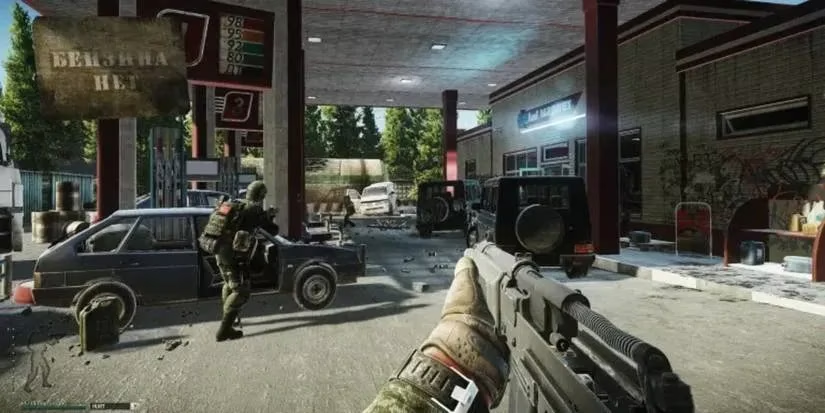
The Generator's Hum: Powering the Heart of the Hideout
Fuel's paramount function is to animate the core utilities within the player's clandestine refuge. It is the vital fluid that courses through the veins of the hideout, bringing to life essential stations such as the workbench for crafting and modifying armaments, the med-station for synthesizing crucial medical supplies, and the illumination system itself. This generator is not a perpetual motion machine; it demands constant sustenance. Its operation is a deliberate choice, a switch that can be flicked on to enable progress or off to conserve the precious resource. The wisdom of turning off the generator during periods of inactivity cannot be overstated, as wasted fuel translates directly into squandered wealth—a financial burden no savvy operative can afford in Tarkov's cutthroat economy.
-
Generator Tiers & Efficiency: Advancements in hideout infrastructure allow for the installation of superior generators. These upgraded models boast larger internal reservoirs, enabling extended operational periods without the frequent need for replenishment. This efficiency is a boon for sustained projects.
-
Fuel Canister Variants: The wasteland yields two primary types of fuel containers, each with distinct characteristics:
| Canister Type | Capacity | Notable Traits |
|---|---|---|
| Expeditionary Fuel Tank | Moderate | A common, utilitarian design often found in military contexts. |
| Metal Fuel Tank | Larger | A sturdier, more voluminous container, prized for its extended burn time. |
Managing these assets, understanding their capacity, and prioritizing their acquisition are fundamental skills for maintaining a functional operational base.
The Scavenger's Pursuit: Sourcing the Liquid Gold
The quest for fuel is a central pillar of the Tarkovian gameplay loop. While it can be obtained through secondary channels such as trader transactions or the volatile flea market—where prices are notoriously steep—the most cost-effective and reliable method remains direct scavenging during perilous raids. This resource is not scattered indiscriminately; it favors specific, often dangerous, locales.
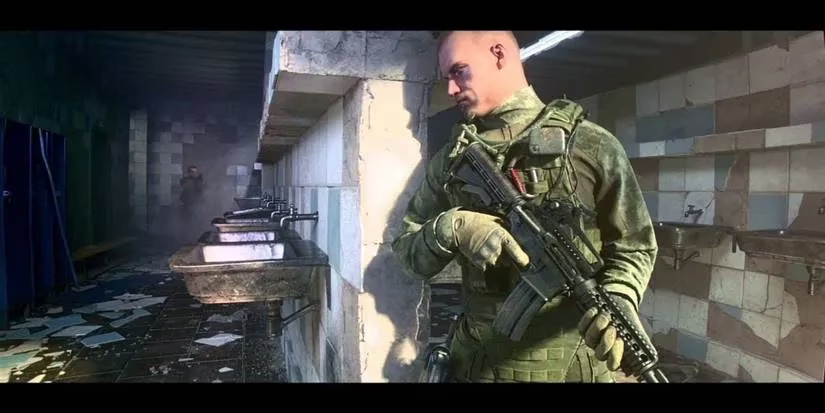
Fuel manifests in the world as a prized component of high-value loot pools. Operatives are most likely to discover these canisters in areas humming with residual industrial activity or commerce. Key hotspots include:
🔧 Industrial Zones & Garages: The skeletal remains of workshops and vehicle depots are prime hunting grounds. Rummaging through toolboxes, shelving units, and near dormant machinery often yields success.
⛽ Gas Stations & Fuel Depots: These locations are, logically, veritable treasure troves. The risk is high, as they are obvious points of interest, but the potential reward in fuel quantity is unparalleled.
🛒 Commercial Backrooms: The logistical areas of large shopping complexes, like those found on the Interchange map, frequently contain fuel stores for generators and equipment.
Furthermore, fallen Scavs sometimes carry these resources on their person, making every engagement a potential opportunity for resupply.
Strategic Considerations for Fuel Runs:
-
Map Selection: Certain maps are renowned for their fuel-finding potential. Interchange, with its vast network of garages and backrooms, and Customs, with its industrial yard and gas station, are particularly fertile grounds. These areas become intense focal points, or hot zones, where scavengers converge, inevitably leading to conflict.
-
Risk vs. Reward: Venturing into these high-yield zones necessitates preparation. A successful fuel run requires more than just luck; it demands adequate armor for protection, a reliable arsenal for defense, and sufficient medical supplies to endure the inevitable skirmishes. The glowing prize of a metal fuel tank is often guarded by the specter of violent confrontation.
-
Persistence Pays: The distribution is random, governed by Tarkov's merciless loot tables. A single raid might not reveal the coveted canister, but consistent, targeted searching in the correct environments statistically tilts the odds in the operative's favor.
In conclusion, as of 2026, fuel retains its position as the indispensable catalyst for progression in Escape From Tarkov. It is the element that separates mere existence from strategic advancement within the hideout. Its acquisition is a mini-game of economics and combat, pushing players out of their safe havens and into the treacherous, open-world raids where the true test of survival begins. Mastering its logistics—knowing where to look, how to conserve it, and how to defend it—is not a secondary skill but a primary tenet of thriving in the endless, grim cycle of Tarkov. The journey from a dark, idle bunker to a brightly lit center of enterprise is measured in liters of fuel, each one a hard-won step away from desolation and toward formidable resilience. 😊
Comments